
EDITORIAL: “Priscilla” Criticism Places Fandom Before Feminism
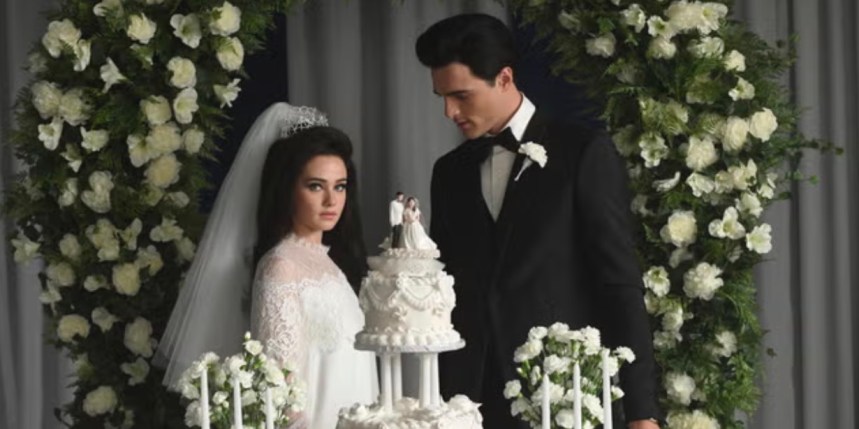
(Photo courtesy people.com)
By Evelyn Rossi – Staff Reporter
The release of “Priscilla” sparked immediate debate among audiences, more specifically, fans of Elvis Presley. Not everyone agrees on whether or not the biopic accurately depicts Elvis or his relationship with Priscilla. Some viewers praise the movie for finally giving Priscilla’s story more attention and highlighting the power imbalance in their relationship, while others claim that it ruined Elvis’ legacy and focuses and emphasizes the darker side of his personality. The controversy surrounding this movie raises an important question about when filmmakers retell the lives and relationships of real people – should they prioritize emotional truth, historical accuracy, or public image?
“Priscilla” directed by Sophia Coppola, inspired the popular memoir by Priscilla Presley herself, “Elvis and Me” has been surrounded with controversies since it first released in 2023. The movie follows Priscilla Beaulieu-Presley’s life with Elvis, right before she meets him, when she is 14 years old, and right after she leaves him at 26.
One of the biggest criticisms about the movie is how the age gap between Priscilla and Elvis affected their relationship; however, in my opinion, many viewers should also take the power imbalance into consideration. The movie highlights the fact that Priscilla was only 14 years old when she first met Elvis, who was 24 at the time. Many watchers realized the disturbing reality of their relationship even in its early stages, and how it emphasized the power imbalance between the two that had often been neglected in the portrayals of their romance. Supporters of the film praise the movie for acknowledging this uncomfortable truth.
Another argument comes from Elvis fans and even the Presley family members. Critics claim the film concentrates too much on aesthetics and not enough on accuracy. Many say it damaged Elvis’s legacy by focusing more on his flaws than on all of his accomplishments. Unlike flashy biopics about Elvis, “Priscilla” presents a quieter and more emotional story of isolation, identity, abuse, and manipulation. This difference divided audiences, some who appreciate the story whether it is true or not, and those who are loyal to Elvis and his image. Although the film has amassed many dedicated fans who enjoy the movie solely for its aesthetics, the focus on aesthetics may have benefited the filmmakers in some ways.
While, yes, Sofia Coppola is a debatable director herself, for only depicting the stories of privileged white women, one can also appreciate her work in feminine cinema. “Feminine cinema” refers to movies that focus on the lives, struggles, and achievements of girls and women, regardless of their circumstances. It seems that many critics put fandom over feminism, rather than acknowledging that their “Idol” may not be as perfect as they seem.
Despite the criticism, “Priscilla” opened important conversations about celebrity relationships and what really happens behind closed doors. The controversy surrounding the film ultimately helped bring more attention to it, proving that viewers are still interested in the lives of these cultural icons. Whether viewers loved or disliked the movie, “Priscilla” succeeded in challenging the traditional image of one of America’s most iconic couples.

