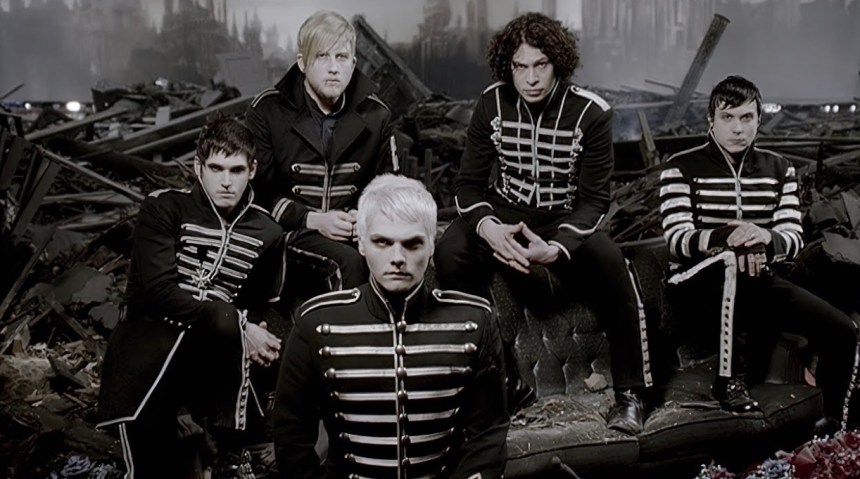
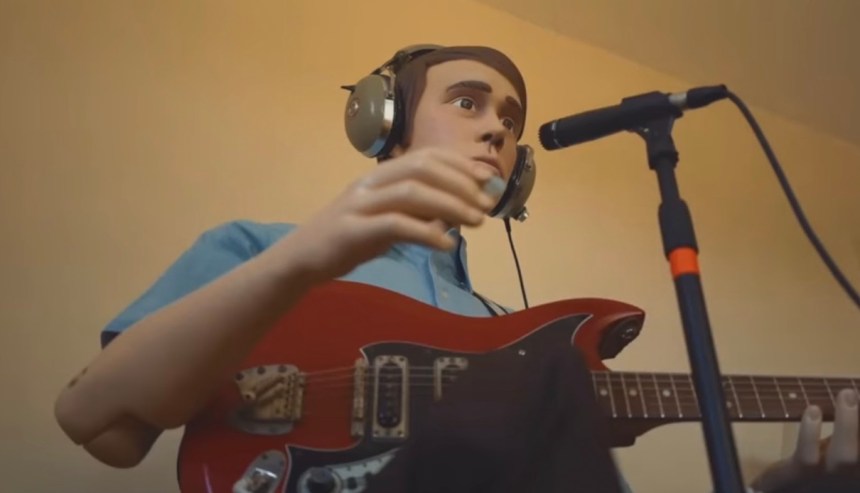
(Photo courtesy youtube.com)
By Ronnie M. – Staff Reporter
“The Black Parade” is the third studio album by New Jersey rock band My Chemical Romance, first released on October 23, 2006, through Reprise Records. Lead singer Gerard Way came up with the idea to make it a concept album, believing that “death beckons you with one’s fondest memory.” It is centered on the story of a man suffering from terminal cancer, known as “The Patient,” and his journey into the afterlife. The album explores themes of death, memory, and reflection, using the phrase “Black Parade” as a metaphor for both the patient’s impending death and a powerful, warped memory of a childhood parade he attended with his father. “Black Parade” is the entity that leads “The Patient” through his journey into the afterlife, narrating the story of the album. This narration leads the songs to often alternate between the perspectives of “The Patient” and Death, chronicling his struggle, acceptance, and eventual journey toward the end of his life. The songs written from his perspective often explore his fear, regret, and struggle to come to terms with his situation; therefore, the lyrics are bitter and selfish. These themes were heavily amplified from the band secluding themselves within the haunted Paramour Mansion located in Los Angeles, a venue the band found to be eerie, and influenced the album’s dark tone. This creative process showed in the 2006 release of “The Black Parade,” a record known as one of the most influential albums in modern rock history. It skillfully integrates rock, pop, and punk elements with orchestral and theatrical components that redefined the boundaries of alternative rock. Each song contributes to the overarching narrative, immersing listeners in the Patient’s emotional and spiritual journey.
The opening track, “The End,” begins with the beeping of a heart monitor. The soft and meaningful lyrics mixed with an acoustic guitar begin the story of “The Patient”: “Now, come on, come all to this tragic affair,” “So gather ’round, piggies, and kiss this goodbye.” This short song is an intro into the album or the beginning of the Patient’s journey through the afterlife, reflecting on the time he has had while he was a part of the living. This transitions into the first proper song on the album, “Dead!” In it, “The Patient” receives the news of his cancer diagnosis. Despite the grim subject matter, the music and lyrics have a sarcastic and upbeat feel, using dark humor as a way to cope with the reality of death. Track three, “This Is How I Disappear,” explores themes of death, regret, and a desire to be forgotten or to fade away, and was inspired by séances — the act of contacting the dead. This shows the Patient’s attitude toward his death, the loneliness it entails. Just like track three, track four, “The Sharpest Lives,” is similar in that it showcases a different way of discussing death; however, its focus is the idea of living life without caring about the consequences of one’s actions. As the Patient looks back on his messy youth, track five, “Welcome to the Black Parade,” the album’s centerpiece, focuses on the Patient’s childhood memory before his death. The song opens up with a brief piano introduction that later transforms into a grand-scale song that incorporates many different rock elements, prominently sounding like a marching band. This starts with the memory of attending a parade with his father and remembering the advice he bestowed upon him. “He said, ‘Will you defeat them? / Your demons, and all the nonbelievers / The plans that they have made?’” This “challenge” is what he grapples with throughout the album. After this powerful anthem is “I Don’t Love You,” the album’s first power ballad, with its themes being self-explanatory, and the emotional difficulty of ending a relationship. Next, “House of Wolves” covers the Patient as he experiences the afterlife, and seemingly ends up in hell, giving solid imagery of what the Patient feels is waiting for him on the other side. This vivid imagery continues in the next track, “Cancer,” where the character comes to terms with the horrific disease, a literal death sentence, and the effects that it has left on his appearance and life. “Now turn away / ‘Cause I’m awful just to see / ‘Cause all my hair’s abandoned all my body,” “But counting down the days to go / It just ain’t living.” “Mama” is centered around the character of “Mother War,” who represents the Patient’s mother, while the Patient begs her for forgiveness for his actions throughout his life. “Sleep” is one of the slower points on the album, being the second power ballad. It is the Patient’s self-reflection and a feeling of a hellish destiny. “Teenagers” is an outlier in the story; it was made as Gerard Way’s expression of his fear for teenagers. This song could be viewed through two different lenses, one operating inside the story and one operating outside of the story. “Disenchanted” is the third and final power ballad in the album. This song presents the concept of realizing or waking up in life, truly seeing it for what it’s actually worth. “The Patient,” when nearing his death, realizes his life was spent passively waiting rather than living meaningfully. The story comes to an end with the fitting final track, “Famous Last Words,” and it is a more uplifting note, something unexpected to find at the end of this album. It is commanding and leaves the listener with redemption and hope. The lyrics are a powerful declaration of overcoming challenges. “I am not afraid to keep on living / I am not afraid to walk this world alone,” “Nothing you can say can stop me going home.” This is the end of an emotionally hard-to-write album with its dark theme.
The production on the album is amazing; it’s well-tuned and mixed. Gerard Way, the lead singer, is the one who is gifted to write all the lyrics for these songs, communicating his feelings through words that are intense and introspective. The rest of the band works together in synergy to express their own emotions through music, fusing it with Gerard’s strong vocals to make masterful songs and albums that inspire and shape younger and older audiences with spiritual music they can connect with, can relate to, so they know they are not alone and aren’t the only ones going through these intense and suffocating thoughts. The band intended the album to be a source of comfort, support, and an “anthem of a generation” for those struggling with mental health issues and personal crises. One thing My Chemical Romance wanted people to take away from this amazing listening experience is a message of hope, courage, and the triumph of the human spirit over darkness, pain, and hardship. This album is a rallying cry for finding the strength to keep living despite life’s challenges it throws in your way.
Rating: 5 out of 5 stars











































 The Advocate Online