
NEWS: Model U.N. Club Teaches Law Students About Important Global Issues
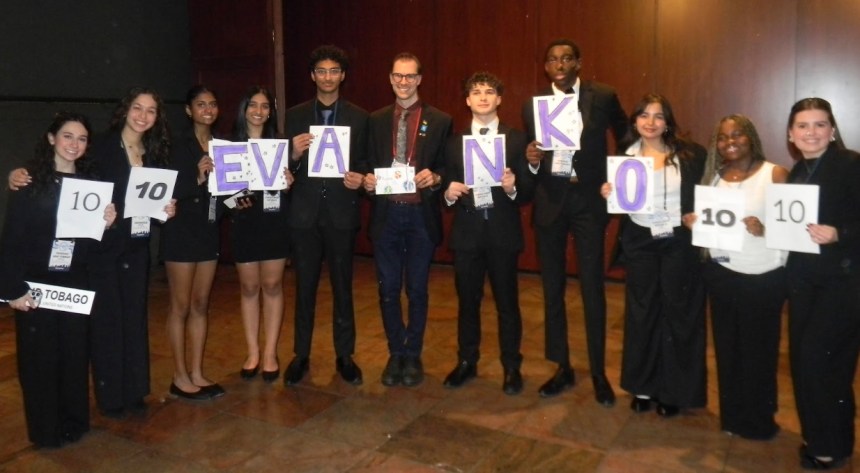
The Jonathan Law Model U.N. Club (Photo courtesy Layla Alogna)
By Tyler Lilly – Staff Reporter
The Jonathan Law Model U.N. Club is accepting new members to simulate the United Nations and solve complex issues.
Students in the club role play as delegates of an assigned country and come together to discuss issues such as war, poverty, and global conflict. Model U.N. Club meets in Room 79 every Friday right after school.
“Students should join the club for many reasons – it is fun, academically enriching, and allows students to meet peers from all around the world,” Model U.N. Advisor Mr. Evanko said.
Students generally appreciate the wide variety of people they meet in Model U.N. and enjoy learning about global issues.
“My personal favorite thing is the people you get to meet, because you don’t just meet people from your state, you meet people from around the world, so they all have their different experiences and they all, with the country they represent, they all have their own day of debating their country, so it’s really interesting to see everybody’s different approaches,” Vice President Layla Alogna said.
Model U.N. attends a conference in New York in March, meeting up with other students to discuss issues on a larger scale. This is a highlight of the school year for many, as it is a different setting from Jonathan Law.
“I think my favorite thing is definitely just being in New York with your friends,” senior club member Surya Gautham said. “And obviously meeting new people from different countries, that’s pretty cool.”
The Model U.N. Club should not be confused with the Model U.N. class. The key difference is that the club attends one large conference in New York, while the class attends two smaller conferences, one at the University of New Haven and the other at Parsons in Milford.
“I joined Model U.N. because I think it’s really good for learning how to public speak, and learning how to say, like, negotiate certain things with people, like different countries who don’t really necessarily believe the same thing you do, and learning how to cooperate with that and adapt to certain conversation is really something you need to learn how to do,” Vice President Natalie Rendon said.
 The Advocate Online