
“TODAY AT SCHOOL WE…”: The Advocate Staff Reports On Their Favorite Daily Learning Experiences

Most of the articles written by The Advocate staff each month focus on Law’s extracurricular activities, sports teams, and student achievements outside of the classroom. But what about the lessons that students are learning in the classroom from 7:20 a.m.-1:58 p.m. every day? This special series – compiled by the Journalism 1, 2, and 3 classes – takes our readers inside the classroom and answers the age-old dinner table question: “What did you do at school today?”
Thank you to all of the teachers who participated.

(Photo by Ella Franzman)
AP UNITED STATES HISTORY WITH MR. LUI
By Ella Franzman – Sports Editor
Mr. Lui recently came up with a fun activity to help his AP United States History students understand the topic of sharecropping that followed after the Civil War.
Following the Civil War, slavery was abolished as a result of the 13th amendment. Unfortunately, a new form of slavery emerged called sharecropping. This system allowed landowners to continue to have a labor force, while giving poor whites and freed blacks a means of subsistence.
Mr. Lui had given his students candy as their ‘currency’. When there was a bad harvest and a variety of other factors, the students were in debt by the end of the simulation and couldn’t pay the landowner (Lui) back. This resulted in them working on his property for another year!
“I enjoyed the lesson because it was fun but I still learned a lot,” sophomore Maddy Baranowsky said. “Plus, we got to eat the M&Ms after so it was really fun.”
The goal of the lesson was to show how poor workers were tied to land that they did not own.
“It gave me more hands-on learning and it helped me understand the concept better,” sophomore Ellie Coddington said.
(Photo by Maya Rosado)
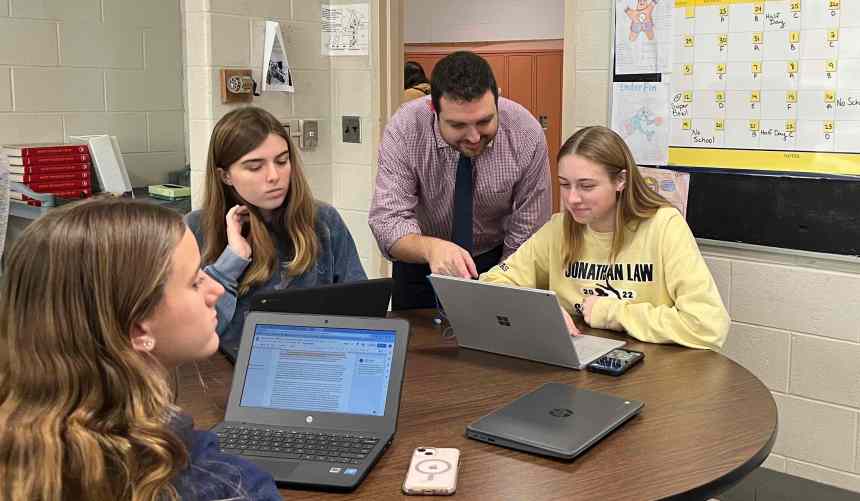
HUMANITIES WITH MR. KULENYCH AND MS. BURNS
By Maya Rosado – Editor-In-Chief
A typical day in a Humanities class with Mr. Kulenych and Ms. Burns involves collaboration with classmates and open-mindedness to new ideas.
One major project students worked on was documentaries about issues facing subcultures at Jonathan Law. Students worked hard during class to write up a script, get interviews, edit films and develop their projects.
Topics that students chose ranged from struggles of different sports teams, life of team captains, gym rats, sports gambling, student drivers, senior privilege and more.
“My favorite part about Humanities is having the freedom to explore topics I’m interested in,” senior Lylah Eckert said.
Students love how the class is designed to let them show their creativity and try new things.
“I love Humanities because we get so much hands-on experience especially when doing the documentary,” senior Hanna Keating said. “I learned to use different video editing technology and was able to share my project with the school.”
Mr. Kulenych has been teaching the class for four years and believes having the opportunity to explore different topics and learn to develop documentaries is extremely valuable.
“The documentary project gave students an opportunity to explore an issue in a subculture here at Law in a fun, creative, and comprehensive way,” Kulenych said. “Students learned important research, interviewing, video editing, and time management skills and worked together to produce some very professional documentaries.”
Students faced a variety of different struggles while working on this project. Recording clear voice overs and getting enough B-roll was a common issue.
“The hardest part of developing my documentary was the editing and learning how to connect all the videos together to make the documentary flow but once we got the hang of it, it was no problem,” Eckert said.
(Photo by Kaitlyn Goldberg)
HUMAN ANATOMY AND PHYSIOLOGY WITH MS. DOOLAN
By Kaitlyn Goldberg – News Editor
The Human Anatomy and Physiology class is getting into the skeleton and bone structure in their latest class.
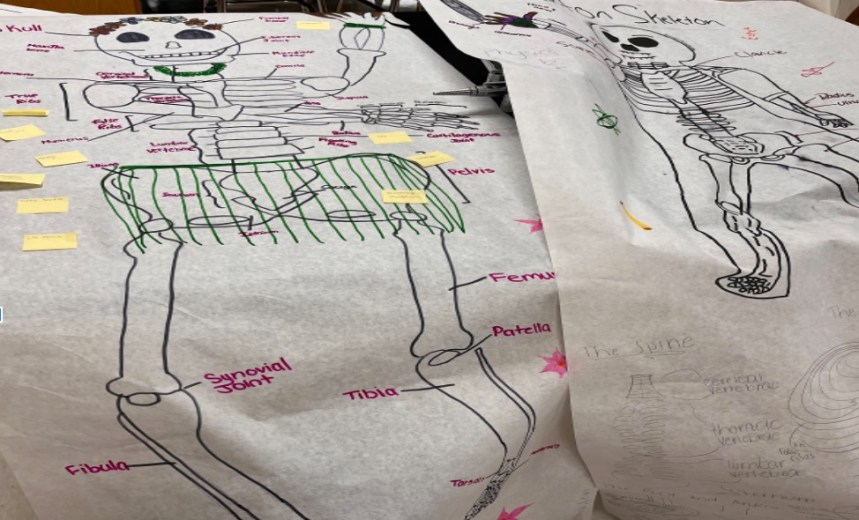
The class used their knowledge of bone structure to create and draw an anatomically correct life-size skeleton. The skeleton was supposed to have a theme and a winning group in either most creative or most anatomically accurate got extra credit.
“Each group had to decide on a theme for their skeleton,” Human Anatomy teacher Ms. Doolan said. “We had a variety of themes from sports to Disney and more, and there were also groups who made their theme based on a teacher or other faculty member in the building, with permission from those involved.”
The activity was a way for the students to put their knowledge of bone structure to use, and to do it in a fun creative way with their friends.
“My favorite part of the activity was working as a group and coming up with creative ideas for the project, we all worked very well together,” junior Carly Pelle said.
The labeling of the bones was a very important part of the project, and getting them anatomically right and knowing what they are used for was key.
“I learned that there are many different parts of the human body and that they are all used in different ways,” junior Kiley Sherman said.

(Photo by Maddy Gaillard)
AP HUMAN GEOGRAPHY WITH MR. ROUMELES
By Maddy Gaillard – Entertainment Editor
AP Human Geography is an interesting course where students learn daily about different elements of society.
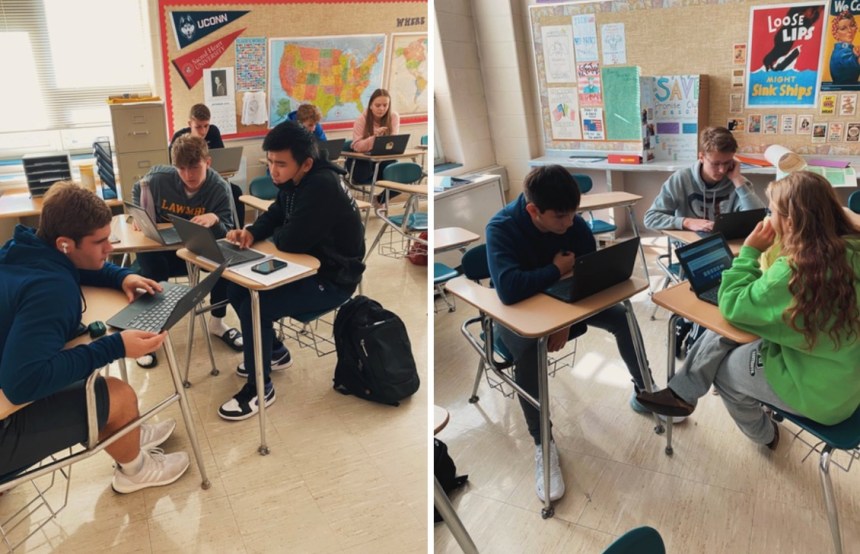
Recently in class, students had an FRQ (Free-Answer Question) workshop where they reviewed their responses as a class and compared them with the rubric to see what they could do better.
This lesson is very important to the students in order to prepare them for the upcoming exam in May and helps AP Human Geography teacher Mr. Roumeles understand what the students need to know.
“I think it is very important for students to evaluate their own work, be open to feedback from both the teacher and their peers, and to be familiar with the expectations of AP style rubrics,” Roumeles said. “This workshop lesson allows for all those components.”
Collaborating with peers is another important piece of this lesson.
“My favorite part of this workshop is being able to share my responses with my classmates and hearing what they have to say about my answer,” junior AP Human Geography student Hannah Fyfe said. “It is really beneficial to see any opposing opinions about my answers and it really helps me become a better writer”.
This activity was really beneficial and interesting and is a great example to see into the daily life of someone enrolled in AP Human Geography.
“This lesson was at a nice pace and easy to learn from,” junior AP Human Geography student Olivia Hudak said. “I was engaged throughout the whole class and I feel like I gained a lot from comparing these responses with my own.”
(Photo by Helen Chizmazia)
AP MACROECONOMICS WITH MS. HEALY
By Helen Chizmazia – Entertainment Editor
Ms. Healy’s AP Macroeconomics class recently used memes to learn about the basics of the economy.
Healy said she used the meme assignment to evaluate students’ progress.
“There are two projects I really like that we do,” Healy said. “I like to use projects as a way to show a deeper understanding of a topic, and in order to make jokes or memes about something you have to really understand it.”
Junior Michael Chesson enjoyed the meme activity.
“My favorite thing we did was the recent meme extra credit assignment,” Chesson said. “I enjoyed that because it gave us a bit of creative freedom and we got to actually judge what we made before we handed it in.”
Healy said the meme activity was one of several projects she enjoys doing with her class.
“So the memes everyone made were a fun activity but also a way for me to gauge everyone’s understanding of the unit (if their meme didn’t make sense it’s because they didn’t get it),” Healy said. “We do another project after the AP Exam as a way to just kind of relax and unwind from the year where everyone plans a vacation.”
Throughout the year, students work on various projects based off concepts they learned during the different units.
“I was able to take away an understanding of how much I actually knew in the class and how well I was able to piece together all that we had learned prior,” Chesson said. “I learned that being able to critique what you had made in a more objective way is something that isn’t much afforded to students.”

(Photo by Katie Servas)
JOURNALISM 2 AND 3 WITH MR. KULENYCH
By Katie Servas – Editor-In-Chief
BREAKING: Jonathan Law’s Journalism 2 and 3 class is looking for your quotes!
Students in the Journalism 2 and 3 classes have been tediously working to spread school news quickly, effectively, and creatively. They release an article, podcast episode, or produced video each letter cycle to keep the student body in tune with activities run throughout the school.
The class has been covering the latest in sports, music, and entertainment, and writing pieces about school policies they want to change.
“The goal every day in Journalism 2 and 3, and especially when students are writing articles, is to give students the opportunity and freedom to do what professional journalists do every day,” Journalism teacher Mr. Kulenych said. “They learn and get to practice researching, interviewing, writing, and editing skills, all of which will help them with their articles – and in life in general.”
Each article is required to have a set amount of quotes from students and teachers relating to the topic of the article. This allows students to interact with their peers and those they may not communicate with otherwise.
“My favorite part about journalism would be writing articles,” said sophomore Social Media Editor Helen Chizmazia. “I really enjoy getting to know people by getting quotes and since there are so many different article topics, you end up meeting so many people and learning about who they are.”
Many students enjoy the atmosphere of the class and how it’s a very low-stress environment even though there are article deadlines. Journalism 1 allows students to discover their own writing styles and learn the basics of journalism writing.
The class has also been working on recording and producing podcasts with other editors. They are able to talk about anything that inspires or interests them. Many of the podcasts range from ranking different topics to interviews with students and faculty, sports analysis, and food tasting.
“I really enjoy podcasting because I enjoy sharing my opinions on things, especially music,” said sophomore Entertainment Editor Reilly Hungerford. “My friends, Olivia Augustine, and Kaitlyn Goldberg, and I actually have a podcast called, ‘New Music Today.’”
Journalism 2 and 3 have been working hard to release information as quickly as possible while creating other forms of digital media for students to enjoy.
(Photo by Gemard Guery)
AP ENGLISH LANGUAGE AND COMPOSITION WITH MRS. LUCIA
By Gemard Guery – Editor-In-Chief
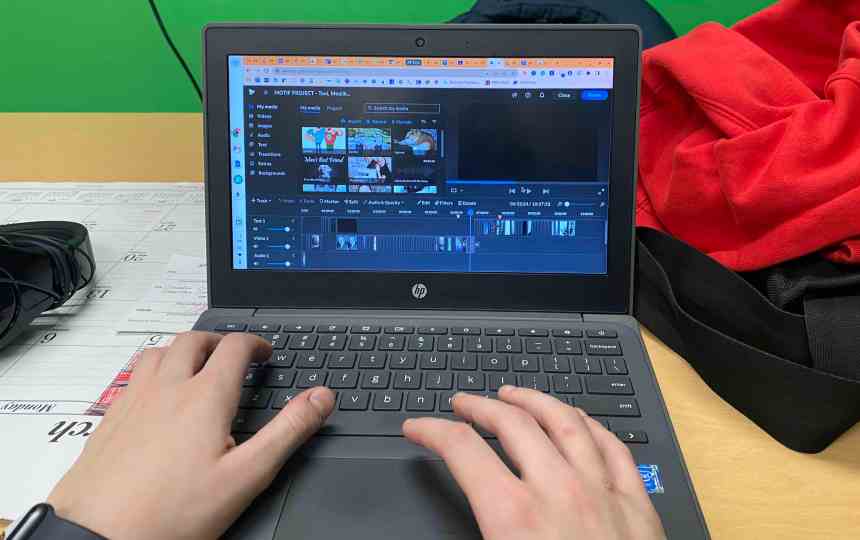
Mrs. Lucia’s AP English Language and Composition classes recently completed a motif video project.
Students explored a specific motif in the novel “In Cold Blood” which has been their book of study for the year thus far. As a group, they were to determine what Truman Capote’s message is concerning this motif, and had to utilize textual evidence to do so.
“I wanted my students to pick one of the topics in the text and look at the way it was developed in the text,” Lucia said. “I wanted students to look for themselves in the text to see how that topic was developed.”
Students had to look into the book to get a feel for what Capote’s message about the motif was.
“The motif project allowed me to work with classmates to dig deeper into text and pull out underlying themes,” junior Toni Cepalia said.
Students had to do research about the time period as well to help pin point Capote’s message. The project was done using WeVideo.
“The project helped me write a good analysis of a character and a text and how it relates to a certain topic,” junior Moulika Sivalenka said. “For example, our group had to write and men and masculinity and the way the author presented it in the book. I was able to find examples of masculine behaviors and was able to analyze them accordingly.”
(Photo courtesy youtube.com)
BROADCAST JOURNALISM WITH MR. KULENYCH
By Truman Martin – Entertainment Editor
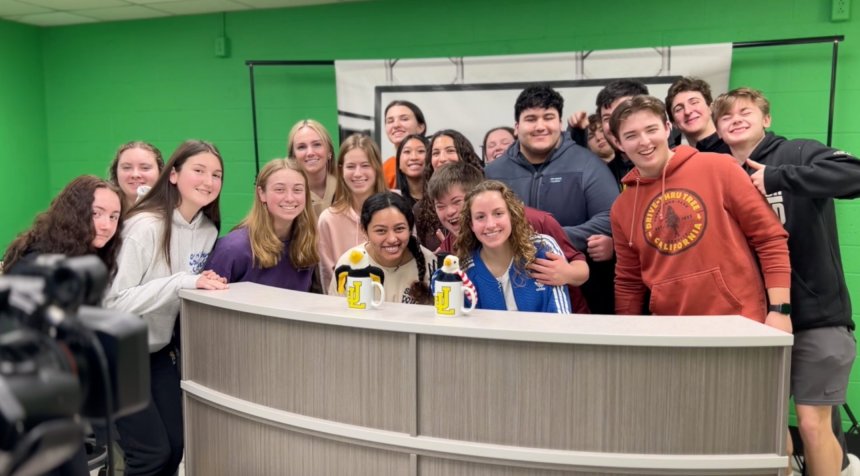
Mr. Kulenych’s Broadcast Journalism class has recently been working on the Class of 2023 Senior Video.
The students are tasked with writing Mean Tweets, skits, superlatives, and other skits in the video, as well as getting all of the footage.
“I think it’s cool that the seniors are pretty much fully in charge of producing the Senior Video,” senior Broadcast Journalism student Gabe Garnett said. “It gives us the opportunity to come up with something unique that we think the senior class will like.”
Senior Videos are a tradition at Law and the Broadcast Journalism class has been creating them for 17 years.
“The Senior Video is one of the best traditions we have in Broadcast,” Kulenych said. “It gives the Broadcast class the real-world experience of producing an hour-long movie and it leaves the graduating class each year with a lasting momento of their time at Law.”
On top of the Senior Video, the students in Broadcast are working on two other projects – recording an episode for each of their podcasts, and a highlight video to be played on the news. At the end of class, the students host daily episodes of Eagle Eye News.
(Photo courtesy Samantha MacDonald)
AP PSYCHOLOGY WITH MS. BURNS
By Olivia Augustine – News Editor
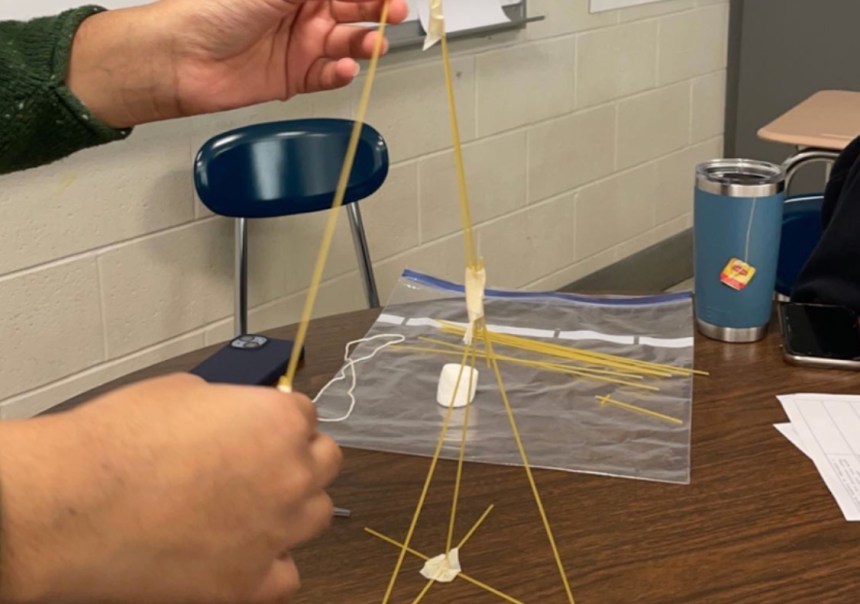
AP Psychology students recently explored cognition by building towers out of spaghetti and putting a marshmallow on top.
Students in AP Psychology worked with the new unit’s vocabulary which is about cognition and had to work together to create the tallest tower.
“The creating the towers of spaghetti, a string, and tape that were structurally sound enough to support the weight of a marshmallow was to facilitate a learning experience that provided an example of many of the current vocabulary words being learned in this unit,” AP Psychology teacher Ms. Burns said. “While building the towers, groups have to use cognition, creativity, trial and error, algorithms, heuristics, prototypes, confirmation bias, and belief perseverance.”
Students had to apply the unit’s vocabulary to the activity.
“The unit’s vocabulary applied to the activities we did in class because they all had to do with cognition which involves thinking, problem-solving, and creativity,” senior Maya Rosado said. “In order to build the highest spaghetti tower we had to use existing knowledge and new things we learned to create the tallest tower.”
The unit AP Psychology students are on is about cognition which has to do with thinking and language.
“In this activity we had to put the units’ vocabulary words to what we are doing in the activity,” senior Kayla Lembo said. “This unit is about thinking and remembering so we had to pick words that we used in our thinking to complete the activity.”
(Photo by Bobby Black)
PHYSICS WITH MR. STANTON
By Bobby Black – Sports Editor
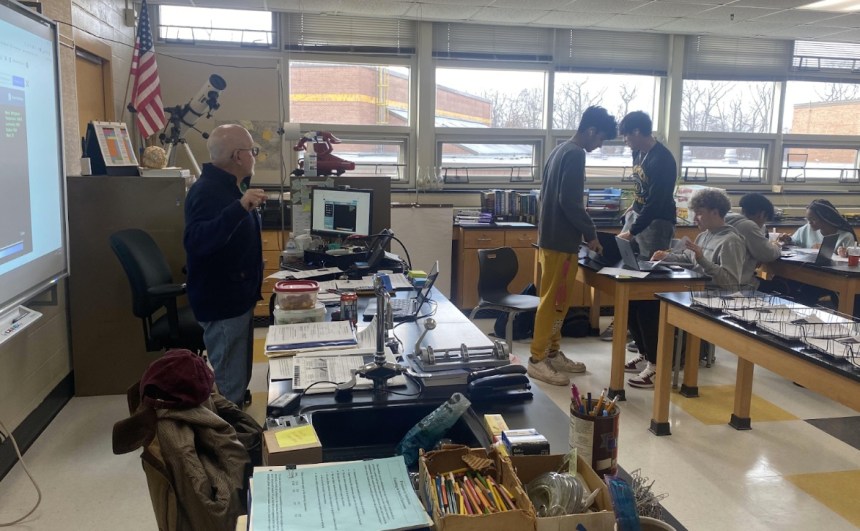
Mr. Stanton’s Physics students recently preformed a lab entitled “Build Your Best Collision Damper.”
Students started by setting up the lab by using a long track. The took a cart and connected it to their Chromebooks and then put it on the track.
“This was a fun lab but the setup was hard,” junior Chris DeProfio said.
Students used the Vernier App to track the velocity, acceleration and distance of the cart with different cart stoppers. The independent variable would always be time.
The cart stoppers were three different prototypes that the students of a group made to try and make the collision of the cart with the wall less dangerous.
The types of material they could use included a few pieces of tape, cotton balls, paper and a ruler to measure.
“The purpose was twofold,” Stanton said. “First, it was an opportunity for you to use the equipment to actually see and measure the impulse and then to devise something to minimize the force by increasing the time. Secondly, the intent was for you to see from actual data that as impulse itself remained constant, varying one component (Delta T) would have an equal and opposite effect on Force F.”
After students had their data, they had to answer some questions about the lab and how they could connect that lab to the real world.
“The lab taught me a lot about the real world and how we can make collisions safer,” junior Liam Valvo said.
(Photo courtesy Lana Hanania)
PHYSICAL EDUCATION WITH MR. ASMUSSEN
By Lana Hanania – News Editor
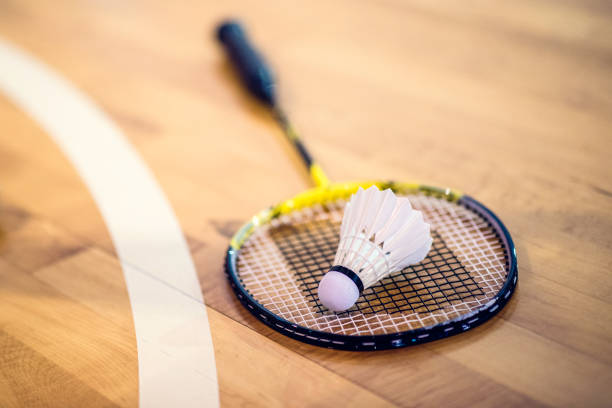
Mr. Asmussen’s classes recently played learned about the lifetime sport of badminton.
Asmussen promotes activities such as badminton, hockey, and the fitness room. He teaches these activities as a mechanism to teach students health, self-care, and teamwork.
“The students are learning how to cope with being on a team and working on skill development,” Asmussen said. “Plus, badminton is a lifetime sport that can be played anywhere or at any age, so it’s important for us as PE teachers to talk about the benefits of these sports as far as lifetime fitness after high school and beyond.”
Gym class is a place where students collaborate together as well as learning about self-care. It can be used as a period for students to get off their screens and get active.
“In gym, this year we go in the fitness room and do exercises, and we spend on a normal day around 40 minutes working out,” sophomore Quinn Willet said. “Gym is fun and teaches us to take care of our bodies and health.”
Students recognize benefits from this class and have learned how it is important to take care of their bodies by exercising.
“I like gym class – it is a period for me where I can do activities I enjoy, such as basketball,” sophomore Micheal Smith said. “ Most of my friends are in my gym class so we learn to interact with one another as well as keeping our bodies healthy and active.”
(Photo by Olivia Hudak)
FORENSIC SCIENCE WITH MS. GAGNON
By Olivia Hudak – Entertainment Editor
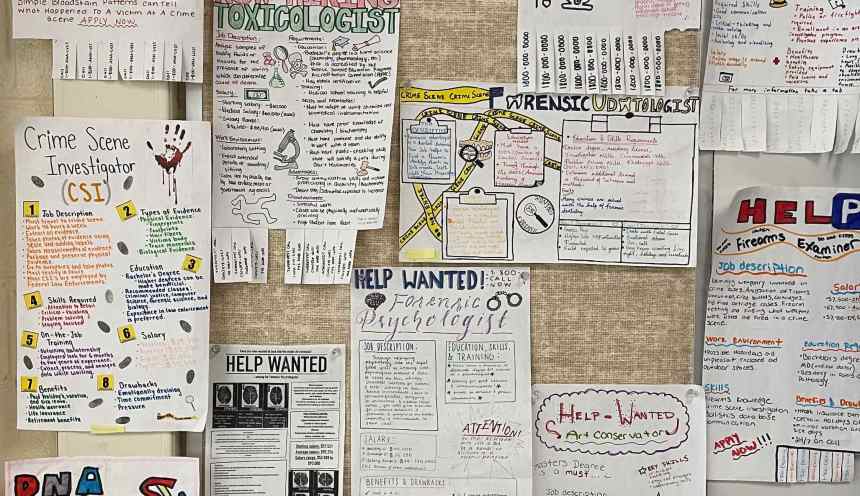
Ms. Gagnon’s Forensic Science class recently completed a poster project which consisted of students choosing one career path in the field of forensic science and researching it.
Students had to research the salary, training, benefits, evidence, job description, and education requirements for the career.
“I chose this as the first project because students often have an idea that forensic science is just like what they see on shows like CSI,” Gagnon said. “This is just one task for students to learn about the impact that TV shows and movies have on the real world cases that involve forensic science.”
Students in this class loved this project as a way to learn something new. This project was able to teach and help students learn about all the different careers forensic science holds.
“I liked this project a lot,” senior Emily Nobles said. “I think it gave all students a chance to research a career they might be interested in before really diving into the class.”
opportunities to think about with colleges and job careers.
“My biggest takeaway was that theres a lot of different career paths in forensic science,” junior Maya Markowitz said. ¨I chose to study about being a forensic toxicologist and learned about the skill and education levels its takes in order to be one.”
(Photo by Caden Simpson)
STRENGTH AND CONDITIONING WITH MRS. BLUDE
By Caden Simpson – Social Media Editor
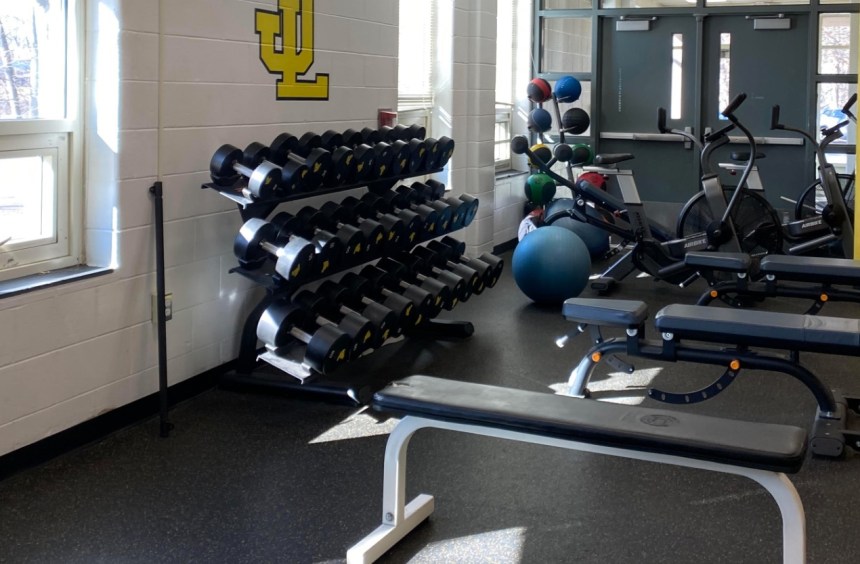
Strength and Conditioning, a newly introduced alternative for gym class, is a class for students who are interested in lifting weights and learning the proper technique and form.
This class takes place in the weight room, where students write down their workout for that day, which is written on the white board. During a typical class, students have around 50 minutes to complete the workout and log it.
“In Strength and Conditioning class our students will come in and have a workout ready for them to complete,” said gym teacher and softball coach Ms. Bludé. “In these workouts we will always have a major barbell lift paired with many other accessory movements utilizing dumbbells, kettlebells, and bodyweight”.
Students bench pressed and completed sets of other exercises in a span of 50 minutes.
“Our workouts will range between benching, back squatting, and core exercise,” said senior Shane Pritchard, who is currently taking Strength and Conditioning. “Today we benched, followed by dumbbell presses and pull ups.”
Students work out with a partner and keep separate logs of their workout- logging what they complete and how many sets.
“By the second quarter, we’ll create our own workouts instead of following the one written on the board,” junior Jessica Brocksom said. “For now, we have to complete four workout logs throughout the course of the quarter.”
Strength and conditioning allows students the time to work out if they are busy with extracurricular activities after school. Students have this class around four times a week, and each day focuses on hitting a different group of muscles.
“Strength and conditioning is not better than other gym classes but it definitely has its advantages,” Bludé said. “In this class you have the opportunity to learn how to lift actual weights, find confidence in yourself, and learn what your body can do”.
If students are a beginner at the gym and want to learn the knowledge and confidence to use weights rather than feel intimidated, this class will definitely help.
(Photo by Zack Sulkis)
SPORTS MARKETING WITH MR. BELER
By Zack Sulkis – Social Media Editor
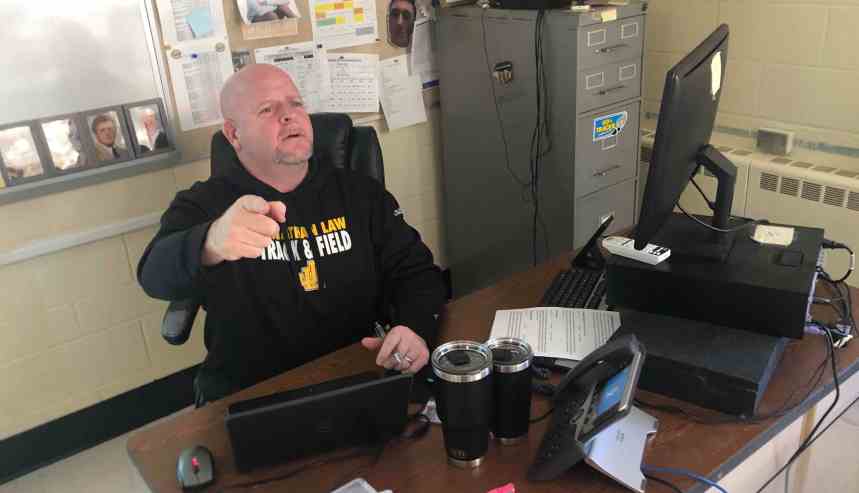
In Sports Marketing Mr. Beler recently taught his students about the history of Super Bowl commercials and the impact they have on the viewers and how it gets them to buy their products.
“I found it pretty interesting, I find it interesting how Budweiser is the king of Super Bowl commercials generating a ton of revenue when not everyone can drink,” junior Antonio Salati said. “I’m looking forward to seeing what their marketing team has cooked up for a commercial this year.”
The class viewed how much it also costs to run these commercials, how much it used to cost, how much it has increased since the first Super Bowl, and how much different the game has become. The first Super Bowl had $12 tickets, a college marching band for halftime, and was broadcast on two networks.
“Today we all experience 6,000 ads a day so this is one of the few times a year companies have the opportunity to get their message out,” Beler said. “During the course of the day they are expecting 110 million views during their broadcast of events and festivities and 100 million early views of the commercials so where else are you going to expect your company to receive that much exposure. The Super Bowl is the number one worldwide event watched at one time on one network. The World Cup final has more viewers however it’s on multiple networks creating different viewing experiences unlike the Super Bowl.”
(Photo by Reilly Hungerford)
ADVANCED VOCAL ENSEMBLE WITH MS. JONES
By Reilly Hungerford – Entertainment Editor
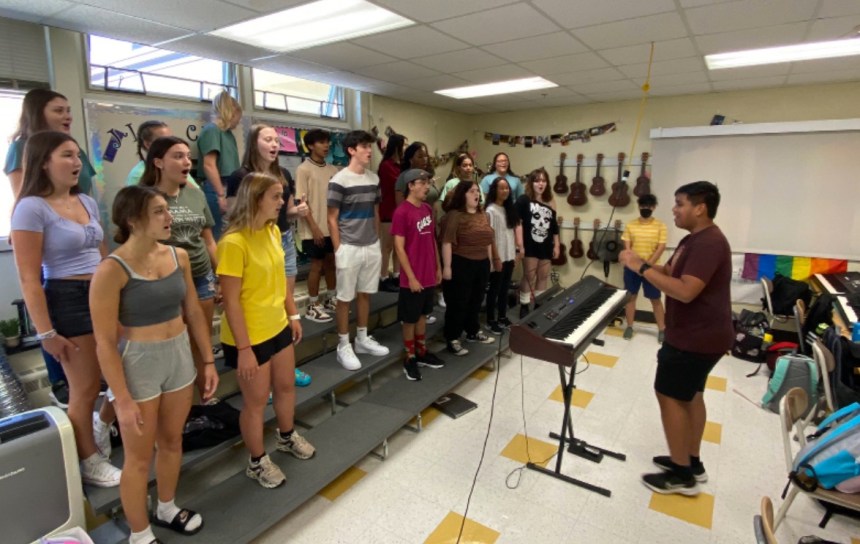
Every day, the Advanced Vocal Ensemble class sings and discusses good news.
On January 10, the Advanced Vocal Ensemble class sung and discussed very good news. They were selected to be the CMEA All State Performance Choir. They also discussed nine Jonathan Law Choir students getting into the All-State choir.
“I am beyond thrilled for all of the students that auditioned for CMEA All-State this year,” Choir Director Ms. Jones said. “For those participating in the festival, I am excited for the skills they will learn and all the experiences they will be able to bring back to our choir to benefit the ensemble, as a whole!”
Advanced Vocal Ensemble (AVE) is a class that can be taken by a student with one year of choir experience at Jonathan Law.
“I decided to take AVE because I thought it would be a good opportunity to extend my learning with music,” sophomore Sarah Gutierrez said. “I’ve always loved to sing and Ms. Jones is one of the best teachers in the school.”
The students who take AVE really enjoy the class.
“I enjoy the unity of music between others out of their clique and getting to talk to others who also like music,” senior Deven Rivera said.

(Photo by Tanner Matchett)
SPANISH 4 WITH MR. MCPARTLAND
By Tanner Matchett – Staff Reporter
Mr. McPartland’s Spanish 4 Level 1 classes have come up with a fun way to practice their language skills – a quick game of Trashketball.
Trashketball is a game that includes multiple skills, including Spanish-speaking skills, hand-eye coordination, and speed. The objective of the game is to score as many points as you can before the other team answers the Spanish questions posted on the board.
“Students enjoy playing games and competing – so do I, competition breeds excellence,” McPartland said. “However as a teacher, a big part of my job is to make there is learning going on. Trashketball is the best of both worlds, yet sometimes becomes more fun than work.”
McPartland believes that fun learning games are more engaging than regular note-taking classes. McPartland has received positive feedback from students and has seen improvements in students’ Spanish skills.
“Trashketball engages me and my classmates because it is more exciting and fun than sitting down at a desk and listening to someone talk for an hour,” junior Hunter Hoxie said. “It gives you an opportunity to move around the room and compete against your classmates while learning/doing Spanish at the same time.”
Students have had fun while learning and improving their Spanish skills. Learning a new language is never easy, but implementing new ways of learning it can make it a little bit easier.
“I like Trashketball so much because it is a fun way to involve the class in a hands-on learning experience, and you practice Spanish in a fun and enjoyable way,” junior Tyler Netthercott said.
(Photo by Cesar Mendez)
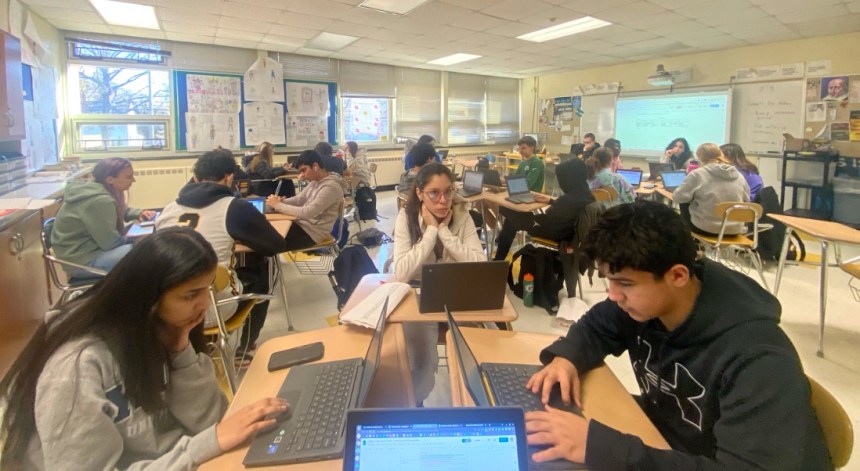
ENGLISH 2 WITH MR. HEALY
By Cesar Mendez – Staff Reporter
Mr. Healy’s English 2 classes recently participated in a Socratic Seminar about the novel “The Catcher In The Rye.”
Healy’s students read the novel and performed a Socratic Seminar about how the story played out and about how the characters developed throughout the book.
“Socratic Seminars are a chance for students to practice their verbal communication skills and demonstrate an understanding of a text in an authentic way,” Healy said. “They allow ideas and perspectives to arise naturally, and then these ideas can be more thoroughly explored through writing and research.”
Healy split the class into two groups and had each group express their ideas to each other. Each students was tasked on answering pre-mature questions to help dig deeper into the book.
“I liked how it brought the conversation out of a quiet class and let us show what we think,” sophomore Tucker Donegan said. “After a while though, it became more difficult to keep the conversation going.”
Donegan, along with the other students, had to work hard to put more detail into their responses.
“I feel it’s a great way to go deeper into the text,” sophomore Ryan Nastasia said. “We just need to work on elaborating on our ideas because it gets quiet sometimes.”

(Photo by Quinn Willett)
MATH AND ENGLISH ACADEMIC SUPPORT CENTER
By Quinn Willett – Staff Reporter
Every day students go to the TLC at Jonathan Law to get academic support.
The Support Center helps students academically and is available to anyone. The main focus is English and math, but teachers in the Support Center can help with any subject area or help student with general organizational skills.
“The fun part of the Support Center is connecting students with students everyday not just about math,” math teacher Mr. Ruzbarsky said. “It is designed to meet the needs of their individual understanding of any second.”
Ruzbarsky said that the best feature of Support Center is that student can get assistance no matter what class they are taking.
“I start with checking in with rostered students first, seeing what students need help I can give them,” Ruzbarsky said. “I help students with anything from Algebra 1 to Calculus.”
There are teachers in the math Support Center each period of the day.
“I go to the Support Center if I need help preparing for a test or if I don’t understand something in class,” junior Maya Markowitz said. “It helps me get my assignments done and with extra help if I need it.”
English teachers are also available each period for students who need extra support.
“In a normal class I might only spend a limited amount of time on a certain concept or writing school, whereas in the Support Center I am able to spend however much time the student may need to reach their goal,” English teacher Ms. Smuniewski said. “I like that it gives me a chance to meet students where they are and work at a healthy pace to take them further.”
The support center is available for extra help on class assignments or just catching up on work.
“I go there for extra help on essays and getting them checked,” junior Amadeus Betancourt said. “If I have a big assignment coming up, other teachers can help me to make sure there are no errors.”
(Photo by Alana Pires)
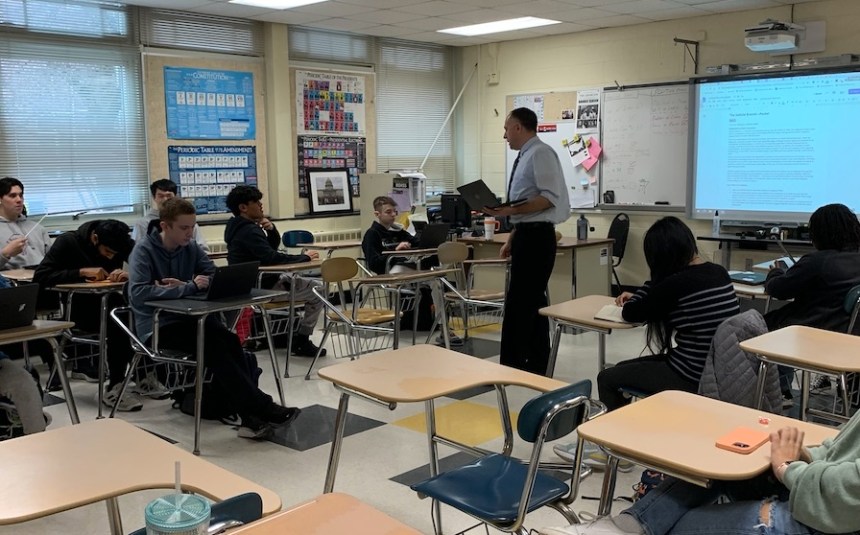
AP GOVERNMENT WITH MR. ZURAW
By Alana Pires – Staff Reporter
Students in Mr. Zuraw’s Period 5 AP Government class recently participate in a Hurricane Katrina activity to learn about cooperative federalism.
The lesson included pretending to be in a real hurricane, to make the activity engaging.
“We were doing a mock hurricane, the windows were open, the lights were off, and Mr. Zuraw was playing hurricane noises on his computer., sophomore Emily Delucia said, “Throughout the lesson we learned how the government failed to take proper cautions in preparation for Hurricane Katrina.”
Students thoroughly enjoyed the activity.
“I thought the lesson was fun; it was something different,” sophomore Maddy Frimp said. “It also had me really engaged, and it was cool to reenact what a hurricane would be like and working as a government official under those circumstances.”
Zuraw explained why he chose to use Hurricane Katrina as an example in the lesson.
“So the purpose of the Hurricane Katrina Simulation was to give students a ‘hands-on’ experience to get a better understanding of the difficulty in cooperation and communication amongst the various levels of government during a crisis,” Zuraw said. “It brought to life one of the vocabulary words from the unit (cooperative federalism) and gave students the opportunity to take on the role of a level of government and make decisions on how to respond to various events during Hurricane Katrina.”

(Photo courtesy @MPSHumanities)
MODEL UN WITH MS. SHAGOURY AND MR. EVANKO
By Maya Markowitz – Staff Reporter
The Jonathan Law and Foran Model UN classes attended their inaugural Milford Conference on January 10.
The event took place at the Parsons Complex in Milford. Students spent the time before the conference preparing in class for this in different ways.
“We wrote position papers and discussed with our class to make each other’s papers better,” junior Ayden Sanchez said.
Students received a country to take the role of in real-life problems. They were split into three groups with students from both high schools and were given a prompt to discuss the best resolutions.
“My favorite part of the conference was being able to work and brainstorm ideas with my peers,” junior Hannah Fyfe said.
Teachers from both schools oversaw this conference; however, it was mostly student-led which is why preparation was a crucial part of this.
“Students prepared for this by first gaining an in-depth understanding of the United Nations and how to communicate their views in a meaningful manner that correlates to the mission of the UN,” history teacher Ms. Shagoury said.
(Photo by Kayla Markowitz)
JOURNALISM 1 WITH MR. KULENYCH
By Kayla Markowitz – Staff Reporter
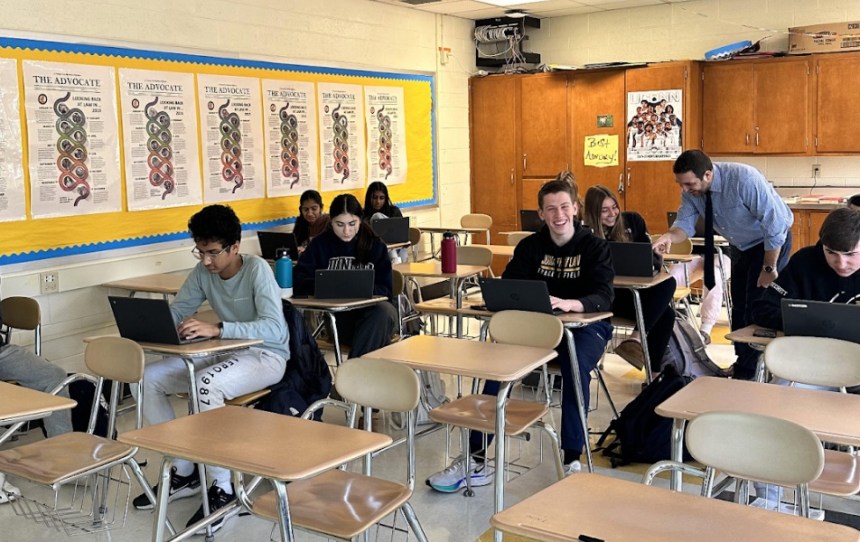
Jonathan Law’s Journalism 1 students recently practiced the process of writing articles that are published in The Advocate.
Students in Journalism 1 choose any topic they would like to write about including school activities and events. They practice the article writing steps and getting quotes for their article to be published.
“Writing articles for The Advocate is the most authentic activity we do in Journalism each month,” Journalism teacher Mr. Kulenych said. “Students must research their article, conduct interviews, and then write and revise their articles. We like to say that Journalism is a half-classroom, half-newsroom, and students writing articles gives them an opportunity to do what a professional journalist does every day.”
Students practice finding exciting topics that will catch readers’ attention and work on interviewing and finding information on their topic just like real journalists. Students also learn how to make their stories interesting and entertaining for the reader.
“My favorite part about learning how to write articles is learning how passionate Lawmen are about being involved in things going on in our school,” junior Jack Bretthauer said.
Each student works on their process and how they like to write articles. They learn the steps of writing articles and work on writing them efficiently. Every staff reporter has the freedom to write their articles on their own and figure out their own process.
“I normally start brainstorming questions to interview people and then ask them my questions over email or in person,” freshman Harshitha Kothapalli said. “Then I start writing my lead, nut graph, quote and as I get more information, I add to my article.”
(Photo by Jack Bretthauer)
PRECALCULUS WITH MRS. DIPRIMIO
By Jack Bretthauer – Staff Reporter
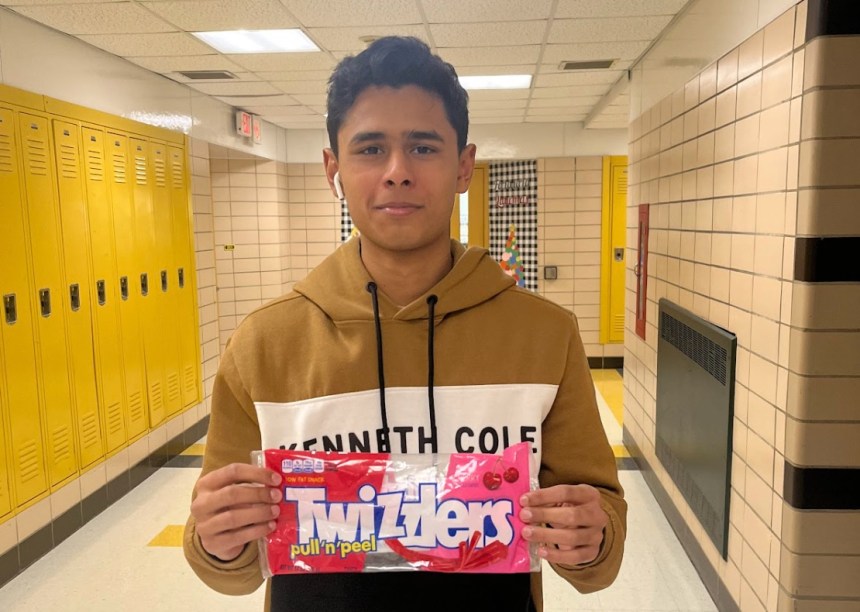
Multiple Jonathan Law math teachers recently used Twizzlers to learn about radians of a circle
Mrs. DiPrimio’s Period 2 Precalculus class used Twizzlers as a measurement tool to find the length of parts of a circle.
“The math department is trying to change the way math is being learned this year by creating experiences for students to tie their learning back to something concrete,” DiPrimio said. “This lesson used manipulatives and our teams so I thought it would be a fun experience.”
Diprimio said she thought the lesson went well, that all of the students were engaged, and that she would do the lesson again in the future.
Junior Gemard Guery thought the lesson was a great learning experience.
“I learned about radians and more about the unit circle which is vital for the rest of precalculus,” Guery said.
This change from “traditional math learning” was very different than typical lessons and that stuck with the students.
“The lesson was an interesting and unexpected surprise,” junior Arshaq Ahmed said. “It made math fun again.”

(Photo by Harshitha Kothapalli)
FRENCH 3 WITH MRS. ALMONTE
By Harshitha Kothapalli – Staff Reporter
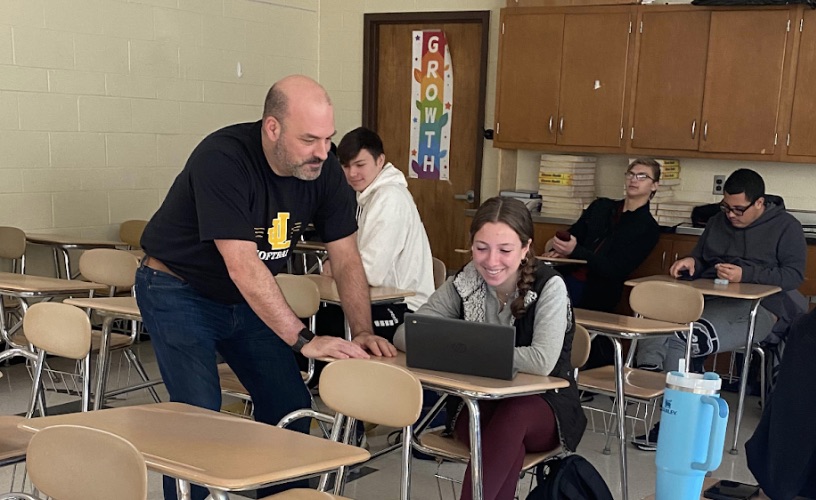
Students in Mrs. Almonte’s French 3 class have recently learned the past tense of reflexive verbs.
At the start of every unit, students practice and learn new vocabulary using different strategies. These strategies allow students to quickly understand new concepts.
“Students learn vocabulary in several ways, they look up definitions and then write the French word three times, practice with Quizlet flashcards, practice with Kahoot/pictures, practice with worksheets, various other games, and of course Blooket,” French teacher Mrs. Almonte said.
One of the many strategies students enjoy is the Scramble game. The Scramble game is a competition between different teams as they hurry to get the French sentence in the correct order.
“My favorite game of learning new vocab is playing the Scramble game especially when I’m on a team with my friends so we can all get euros,” freshman Kayla Markowitz said.
Students love competing against each other to get the top spot during their different games.
“I like playing Blooket because not only does it have a sense of competition but it also helps me remember and understand all the concepts,” freshman Hunter Corris said.
(Photo by Hannah Engel)
HEALTH WITH MR. SWEENEY
By Hannah Engel – Staff Reporter
Students in Mr. Sweeney’s Health class recently learned about the important of first aid.
Sweeney said this topic is the most important topic he teaches all year.
“The most important lesson we teach are CPR, Red Cross, and AED because they are all life saving skills,” Sweeney said. “It is important to learn the ability to ascertain a situation quickly and understand what steps a certified lay responder needs to take in order to save a life is an amazing skill.”
All students will learn these skills and get certified as sophomores. They will later re-evaluate these skills as seniors.
“I think that what we’re learning is important because it helps us be prepared in case of an emergency when our learning skills are needed,” sophomore Hunter Cascante said. “This activity is fun because you learn how to help and make people’s lives better.”
These skills can be used in students’ everyday lives at gatherings, school, and more.
“It is exciting to learn about because it’s a life skill everyone should have,” sophomore Maddy Baranowsky said. “You never know where you will need these skills.”

(Photo by Cesar Mendez)
CULINARY WITH MRS. RYAN
By Tim Firla – Staff Reporter
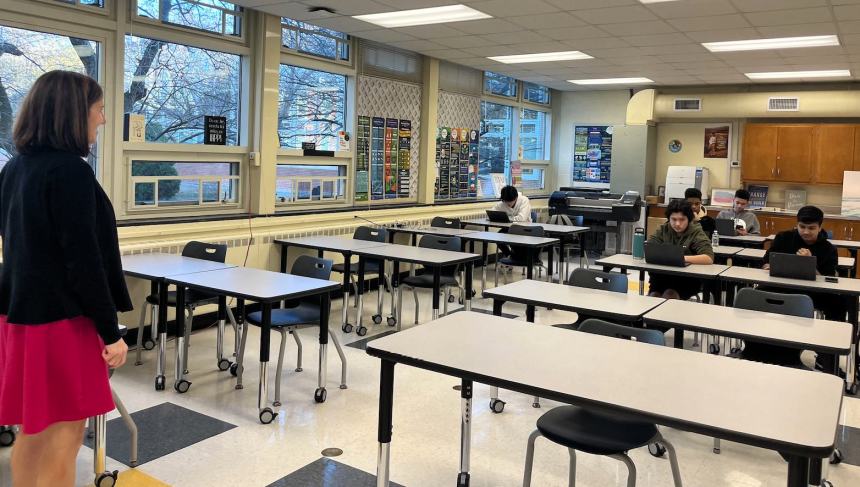
In Mrs. Ryan’s Culinary class, students have learned to use time management and their skills to make delicious cupcakes for a special Law edition of “Cupcake Wars.”
The project starts off with students getting into pairs and brainstorming ideas on what to use, how to use it, and most importantly make sure the taste and the design are as perfect as possible.
“The competitive spirit of Cupcake Wars engages students to produce their best product,” Ryan said. “Students come up with the recipes and have the ability to personalize their offerings with decorative items. Although some cupcakes look professionally made, in the end, the judges go with flavor. What do students get from this friendly competition? They learn how to manage their time, follow the tenets of proper baking, show their creativity, and if they win, bragging rights.”
Although this is a big grade for students, it doesn’t stop them from enjoying a friendly competition. It is a fun way for the students to enjoy and learn skills at the same time.
“I learned how to bake quickly in a competition,” sophomore Quinn Willett said. “It was a fun activity and it showed us how to work quickly in the kitchen with only a certain amount of time and be as creative as you want.”
Sophomore Cesar Mendez said the competition improved his cooking skills.
“I learned how to be more precise with measuring from Cupcake Wars,” Mendez said.
(Photo by Maya Rosado)
PERSONAL FINANCE WITH MRS. ISRAELITE
By Kruthi Nandam – Staff Reporter
Mrs. Israelite teaches Personal Finance, which is supposed to help students learn about the basic financial concepts that will be used later in life.
One of the important lessons was about SMART Goals. Students learned about how to efficiently plan out a goal that has some financial planning involved in it.
“The process makes the goals into a reality by making them measurable and specific in how you will achieve your goal,” Israelite said.
Students learned about the SMART goal process because it helps to make financial goals or any goal in general but specifically financially. Goal setting is a good way to make sure people reach the destination of their goal.
This process can help evaluate the opportunity costs and the amount of time that it will take to reach the goal. Knowing this process will help people reach any goal.
“The SMART goal helps me know what I want in the future and how it helps me plan out what I want to do with my money when it comes to important aspects involving money, so I can aim for success,” freshman Zoe Bates said.
This way of goal setting challenges anyone to do better because there is always room for improvement.
“Personal Finance helps guide you in the right direction,” freshman Andrea Crump said. “It has a well-laid-out plan to achieve your goals.”
(Photo by Aryan Sikhinam)
INTRO TO COMPUTER SCIENCE WITH MS. CORRIVEAU
By Aryan Sikhinam – Staff Reporter
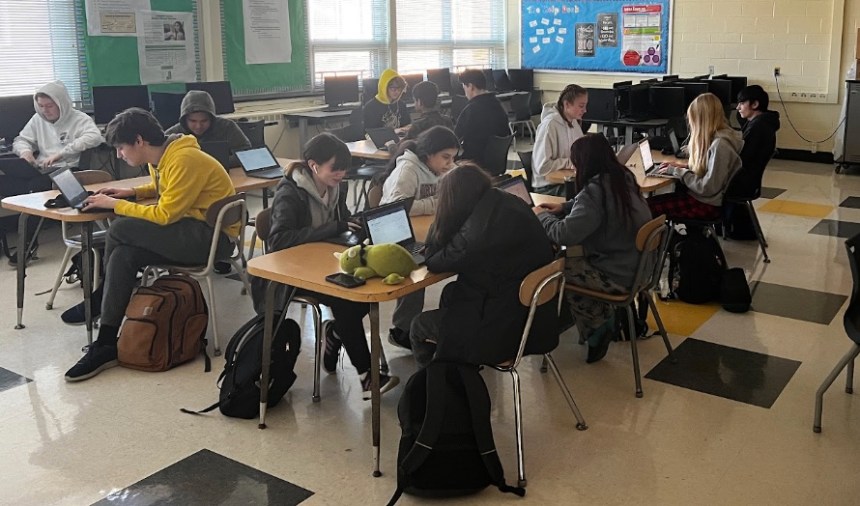
Ms. Corriveau’s Intro To Computer Science class is a fun and engaging class that teaches students about the basics of computer science.
Students get to code and make their own website in HTML and CSS. The Intro To Computer Science class recently made their own website, by coding in HTML and CSS.
“I think it’s important for students to have an understanding of not only how to safely and appropriately use the web, but also understand the mechanics behind how it works,” Corriveau said. “Learning the language of the Web (HTML/CSS) is an essential part of learning how code is used to create helpful applications.”
Students spent multiple class periods, making their own website and refining it.
“It was pretty cool learning about HTML and CSS coding,” freshman Cooper Pietrowski said. “I was making a website about a famous computer scientist and then we made one about myself using similar code.”
Corriveau teaches about HTML and CSS and gives students an opportunity to create their own websites about themselves. Students also learn about the parts of a computer and how to use MIT App Inventor.
“Coding in HTML and CSS was very engaging and intriguing,” freshman David Guery said. “We learned various different types of programs and functions to run and then we applied them in a personalized website curated to our liking.”

(Photo by Asim Medina)
ALGEBRA 2 WITH MRS. FRANCISCO
By Asim Media – Staff Reporter
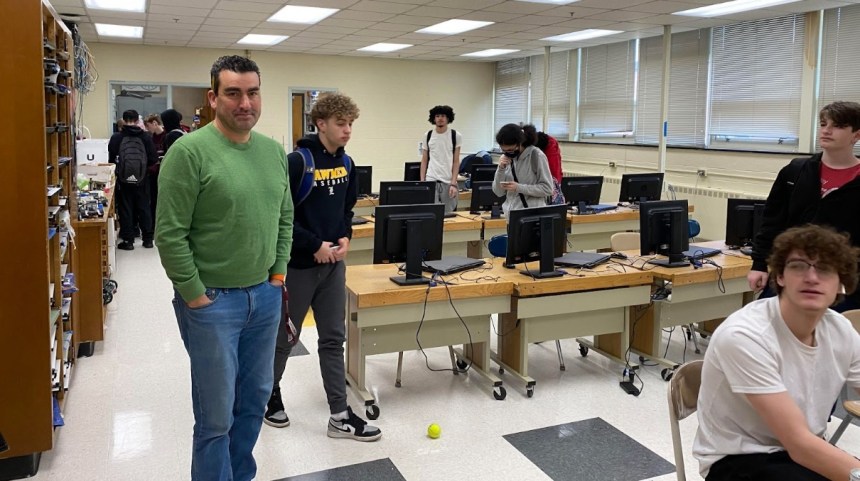
Mrs. Francisco recently taught her Algebra 2 class how to multiply and divide polynomials.
To multiply polynomials, students had to multiply each term in one polynomial by each term in the other polynomial using the distributive property. After they did this, they added the powers of the same variables using the exponent rule, then simplified the resulting polynomial by adding or subtracting the like terms.
Francisco taught her students the box method for multiplying polynomials.
“It’s easier to multiply and divide it that way,” Francisco said.
This lesson was important because there will be questions on polynomials on the Algebra 2 final exam. Students found the exercise enjoyable.
“This is very easy for me, especially when you’re multiplying it,” junior Macy Tiche said.
This lesson is also useful because it can help students in real world situations.
“I can fully understand how to multiply and divide polynomials,” sophomore Peter Gill said.
(Photo by Gabe Garnett)
ENGINEERING DESIGN WITH MR. BARCELLO
By Gabe Garnett – Sports Editor
Mr. Barcello’s Engineering Design class was recently challenged to create ways to protect a raw egg from breaking while falling from a 15 foot drop.
Students were given a fake $100 spending limit on supplies they could buy. They had three class periods to complete the project.
“Finding ways to protect the egg with the minimal amount of resources we have is pretty hard but also very fun because it makes us all think creatively,” senior Engineering Design student Jared DeGennaro said. “Building and redesigning when something doesn’t go as planned as it should is what makes the whole process of building fun.”
Barcello said that his students enjoyed the challenge of the project.
“I love the egg drop challenge because it challenges kids to create and design ways to protect the egg from breaking,” Barcello said.
On top of building their structures, students also had to document their thought process.
At the end of the class, Barcello dropped the eggs from a 15 foot drop and students watched to see if their egg survived the fall.

(Photo courtesy Will Smith)
CHEMISTRY WITH MS. TURCOTTE
By Will Smith – Entertainment Editor
Ms. Turcotte’s Chemistry classes recently performed a lab on metallic bonding that turned a penny into gold.
Students got into groups of two each with a penny that was minted before 1982. They cleaned the penny and then place dit into a mini crucible with a mixture of zinc and sodium hydroxide.
“In chemistry, we recently explored metallic bonding by turning pennies into gold,” Turcotte said. “Are the pennies actually gold now? You will have to ask a chemistry student.”
Students then put a burner under the crucible and let it sit. They then dried the penny.
“Turning the penny into gold was cool because we got to use fire,” sophomore Cesar Mendez said. “My partner messed up and almost destroyed his penny so that was pretty funny.”
The penny was waved over the burner with tongs and turned gold. If it was waved over the flame too long, it would turn black.
“Turning the penny into gold was an interesting experiment because it was fun to learn about how different chemicals react to each other,” sophomore Gavin Nett said. “Hands-on experiments are more enjoyable than doing classwork and give us real experience dealing with the chemicals.”

(Photo by Chloe Konareski)
GEOMETRY WITH MS. RUSSELL
By Chloe Konareski – Staff Reporter
Ms. Russell’s Geometry students recently used “quick notes” to help them understand new material.
Russell and her class start by collaborating through the first side of the sheet and “quick notes” together, then work on the back individually using the knowledge they just learned.
“The worksheets focus on a method of learning called Experience First Formalize Later (EFFL),” Russell said. “The purpose of this is to have the students discover new learning on their own, then as a class we go over what they found and formalize it so that everyone can share their learning. I think it helps them to really understand the concepts that we are learning because they are coming up with their own ideas, and not just copying down notes.”
The daily assignment process helps students surface prior knowledge. It can be used to activate students learning for the lesson and familiarize students with the subject.
“I learn more about math and geometry by doing these worksheets,” sophomore Blake Crawford said. “They help me better understand and get better at Geometry.”
The goal of the lesson is to help prepare for future assignments, tests, and quizzes.
“These worksheets help me better understand Geometry,” sophomore Madyson Bull said. “We have quick notes where we take notes about the topic and talk about them and it makes it easier to comprehend.”
 The Advocate Online