
FEATURES: College Tuition Prices, Student Loan Debts Continue To Rise
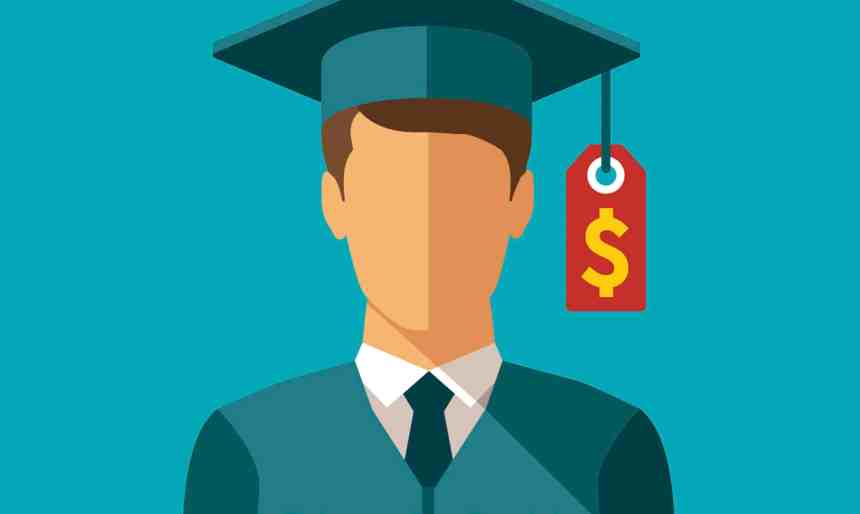
(Photo courtesy thecollegeinvestor.com)
By Stefanie Lojko – Staff Reporter
Shayna Levay, a senior at Jonathan Law High School, had to make the tough decision between the University Of New Haven and Central Connecticut State University. She thought about all the factors such as dorms, commuting, food, and program types. When she saw how much the prices of each school were, she struggled for a few weeks on deciding what to do, deciding between what she wanted out of her college experience and what she could afford.
In the end, it all came down to the price.
For most seniors like Levay, college is the next step in their educational journey. For many, however, college is a goal that’s just out of their reach.
According to the National Center for Education Statistics, the average cost per year for the 2015-2016 academic year was just over $19,000 for a public four-year university. Middle class families make an income “between $45,000 and $135,000” a year.
Going to a four-year college for $19,000 a year adds up to $76,000. These numbers are scary to any student that’s been in a free public school for the past 12 years.
The government tries to soften the impact of college pricing with financial aid through grants and loans. Unfortunately, they can’t give a lot to every student because so many students are all doing the same thing – applying to get money help from the government.
Federal student loans average that students will pay off their debt in less than 10 years. Most of the time, that is not the case.
“With a college degree often being a basic requirement for professional jobs, not getting a college degree can put workers at a major disadvantage in the job market,” Camilo Maldonado, co-founder of The Finance Twins, said.
According to the Center On Education And The Workforce, 35% of the job openings require at least a bachelor’s degree and 30% of job openings will require some college or associate’s degree.
One in five college grads still aren’t working a degree-demanding job a decade after leaving school. With many students that do not have a job right out of college, they think of it as a phase but a few months could lead to a few years.
Students will tend to spiral once they do not have a job out of school because they can’t afford to pay back loans and support themselves. They find any job they can but as life goes on, they can not afford to be unemployed looking for a job relating to their degree. They end up in a downward spiral.
Prices for private and public four-year colleges have risen so much in the past 10 years that community college enrollment rates have increased by 25%. Community colleges are a perfect way for many students to get an education without having to pay these crazy loans.
College tuition prices and student loan debt have even become major issues on the 2020 presidential campaign trail.
Many of the 2020 presidential candidates are agreeing that public education needs to be changed. Many, like John Hickenlooper, believe that student loans interest rates should be brought down while some believe that education should be free entirely.
“We need to commit to 16 years of free public education for all our children,” 2020 presidential candidate Joe Biden said. “We all know that 12 years of public education is not enough. As a nation let’s make the same commitment to a college education today that we made to a high school education 100 years ago.”
Bernie Sanders believes that public college tuition should be free and that the federal government would fund two-thirds and the states would fund the rest.
“It is totally counterproductive for our future that millions of Americans are carrying outrageous levels of student debt,” Sanders said.
In 1981, the average student debt was only $1,910 and grew to be $16,604 by 2016. That’s a 35 year difference with student debt pricing raising about $16,000.
“Our child is in ecstasy, but where is the money going to come from?” Beth Greulich, financial advisor at Abacus Wealth Partners, said.
Students aren’t the only ones suffering. Parents can no longer think about their retirement plans because they are taking money out of their savings in order for their students to pay for their education.
“Many of these dreams are gone because they would rather help their kids with their own financial stability,” Greulich said.
Many people are starting families and getting married later on in life because their debt is so bad, they can’t afford it. The percentage of graduates moving back home after college have raised to 28% in 2016 after being at 19% in 2005.
Graduates are also having a hard time making down payments on homes after college because they are only in their 20s and are already paying back the debt of college.
For students like Shayna Levay, going with the least pricey option isn’t always enough. Not every student will receive thousands of dollars in scholarships or get help from FAFSA in order to pursue their college career.
It’s time that more people understand this struggle that thousands of students face.
(Some information courtesy ctpost.com, forbes.com, usnews.com, georgetown.edu, debt.org, cnbc.com, collegeboard.com, marketwatch.com, investmentnews.com, higheredtoday.org)
 The Advocate Online