
FEATURES: Millions Of Children In U.S. Living In Poverty
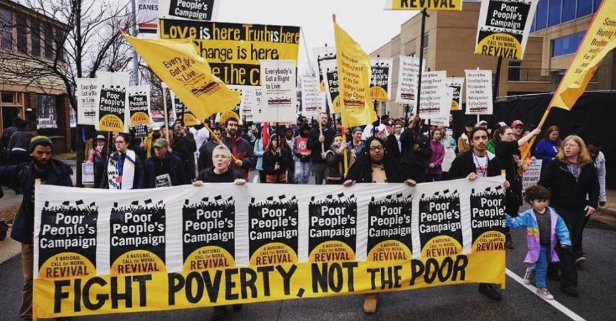
(Photo courtesy theatlantic.com)
By Mia Cerrato – Staff Reporter
Jairo Gomez, a 17-year-old who lives in a one bedroom apartment with his other eight family members, is amidst the horrors of poverty in the U.S. Gomez has grown up in poverty just like one third of kids in New York City. He attempts to support his family financially, but it is very difficult. Gomez had to trade his freedom to support his family. Most 17-year-olds hang out with friends, go to sports practice, or just attend school. But in Gomez’s case, he is working 13-hour shifts, making food deliveries on bike, and in his spare time watching his siblings while his single mother is working as well. He acknowledges that to dig himself out of poverty is impossible without an education, something he is not receiving.
Jairo Gomez is just one of millions of teenagers fighting poverty in the U.S. every day. According to Child International, one in seven children will be born into poverty in the United States. Poverty is an issue that impacts kids mentally and physically. It will affect every aspect of their life.
Jenny Brundin of Colorado Public Radio said, “Poverty can have long lasting impacts on children, mainly because of the stress and trauma associated with it. Researchers are finding a significant link between that stress, brain development and academic performance.”
Many kids in poverty are controlled by their endless responsibilities. For instance, those in poverty must worry about feeding their siblings or helping to pay rent.
“‘I know a student’s got a better life than me when all they have to do is go home and do homework,” 17-year-old Chaunsae Dyson said. “Working a job is a necessity; it is a need for me.’”
Many children in poverty also lack strong parental figures; they often don’t have anyone to look up to or rely on.
Luis Robles, a teen directly impacted by poverty, said, “‘As a young man you see your dad or your older brother as a role model – for me it was a role model of what I did not want to do. I would see my brother – he was into smoking marijuana – my dad he was an alcoholic – so I always told myself, that’s not what I want to do. When I grow up to that age – I don’t want to be like them.”
In many of these cases, a teacher can take the place of a parent or guardian. A teacher’s attention and support makes a large impact on how a student performs and feels. It enables them to see their own potential.
Brudin said, “It takes one teacher noticing them, telling them they have potential. That’s made the difference.”
According to Brudin, creativeness, imagination, and motivation could be in danger for kids living in poverty. These kids could improve and grow if they were provided with the right people, resources, and circumstances. Poverty also has colossal impact on brain development.
A new study in the Journal of Health Affairs shows that for the one in five children who’ve been through at least two of these traumatic experiences, the consequences can be dire. Those kids were twice as likely as their peers to have a chronic condition and special health needs. They were 2.5 times more likely to repeat grades in school.
Their often chaotic living situation also greatly contributes to brain development. Studies have shown that poverty impairs vocabulary and language development. Poverty-related stress can lower the prefrontal cortex’s ability to process information. For instance, learning and memory.
Researcher Pilyoung Kim has written about how this stress impairs development in the prefrontal cortex – that’s the part of the brain that regulates emotions like fear, sadness, and anger. She found that too much stress strengthens connections in the amygdala, which helps us detect dangers and threats from the environment.
“If there is imbalance in communication between two regions, one possibility would be the child needs a lot longer time to recover from negative states like being very anxious, fearful or sometimes angry when experiencing a stressor, like someone reacting to them in a hostile way,” Kim said.
This can explain some hostile, violent behaviors in children living in poverty and why they think that harmless situations or interactions are threatening. Mental illnesses such as depression and anxiety go hand and hand with the development of the brain.
Destiny Carney, 18, grew up in severe poverty. For a majority of her life, Carney was homeless with her mother who struggled with addiction. Her mother often neglected her and she was bullied in school because of these circumstances.
There are many studies that show mothers and children in extreme poverty will suffer from depression.
“‘I feel that when you are homeless and the environment the people you are around sometimes kind of make you feel like you can’t do it,” Carney said.
Those in poverty have to deal with constant negativity, whether it be people they are surrounded by or situations they are in. To most, it feels like they will be stuck in poverty forever.
“Because some of the other people are, ‘well, you know I really wanted to do this but I’m just going to get Section 8,'” Carney said. “They’re not really trying hard and other people want to bring you down and there’s drama and I feel like once you get in poverty, it’s kind of hard to get out.’”
Race plays a large role in poverty as well. Hispanic and black children are more likely to live in poor families than their non-Hispanic white and Asian children. In 2017, 11 percent of both non-Hispanic white and Asian children were impoverished, compared with 25 percent of Hispanic children and 29 percent of black children.
In the same year, more than half of Hispanic (54 percent) and black (57 percent) children were in low income families. By contrast, 27 percent of Asian and of non-Hispanic white children lived in low-income families. Black children were more likely than Hispanic children to be in deep poverty (15 and 11 percent, respectively), and both were more likely to be in deep poverty than non-Hispanic white or Asian children (each at 5 percent).
Age is also connected to poverty and homelessness.
Research agency Child Trends wrote, “In 2017, the poverty rate for children under age 5 was higher than for children ages 5 to 17, at 19 and 16 percent, respectively.”
According to Jill Rosen of John Hopkins University, 5.6% of kids from 0-5 years of age, 10% of teen girls from 12-18 years of age and 14% of teen boys from 12-18 years of age aren’t receiving enough to eat.
Those who suffered the most from food deprivation are boys.
About six percent of children up to five years of age weren’t getting enough to eat, and slightly older children, those up to age 11, fared about the same. But with children 12 to 18, nearly 12 percent of them regularly went hungry.
It’s unclear why teenage boys go hungry more often than girls. It could be because of their need for more calories and being outside of the house often.
Adults on the other hand have different hunger statistics.
“Researchers found 12 percent of the adults in these disadvantaged families suffered from extreme food hardship, answering ‘yes’ to several of the screening questions,” Rosen said.
Yet, there are various supports for these low income families to reduce poverty and apparently have long term effects.
Some assistance programs funded by the federal government are Temporary Assistance for Needy Families (TANF), Supplemental Security Income (SSI) and the Earned Income Credit (EIC).
There are other programs that are not funded by the government in hopes to end poverty such as, Save the Children, Children’s Hunger Alliance, The Hunger Project, Bread for the World and many more.
Although, these programs and organizations could only do so much for citizens such as Jairo Gomez.
“It gets me mad that my mom works so hard,” said Gomez. “And there are people out there who are just born into it.”
People who are born into wealth don’t have to endure the struggles others have.
“They make money like nothing,” said Gomez. “They don’t have to clean houses, wake up early, drain themselves. We’re told, ‘If you work hard, you’ll get results.’ But for my family, there haven’t been any results – just survival.”
(Some information courtesy futurity.org, cpr.org)
 The Advocate Online