
FEATURES: Study Shows Holocaust Knowledge On The Decline, But Why?
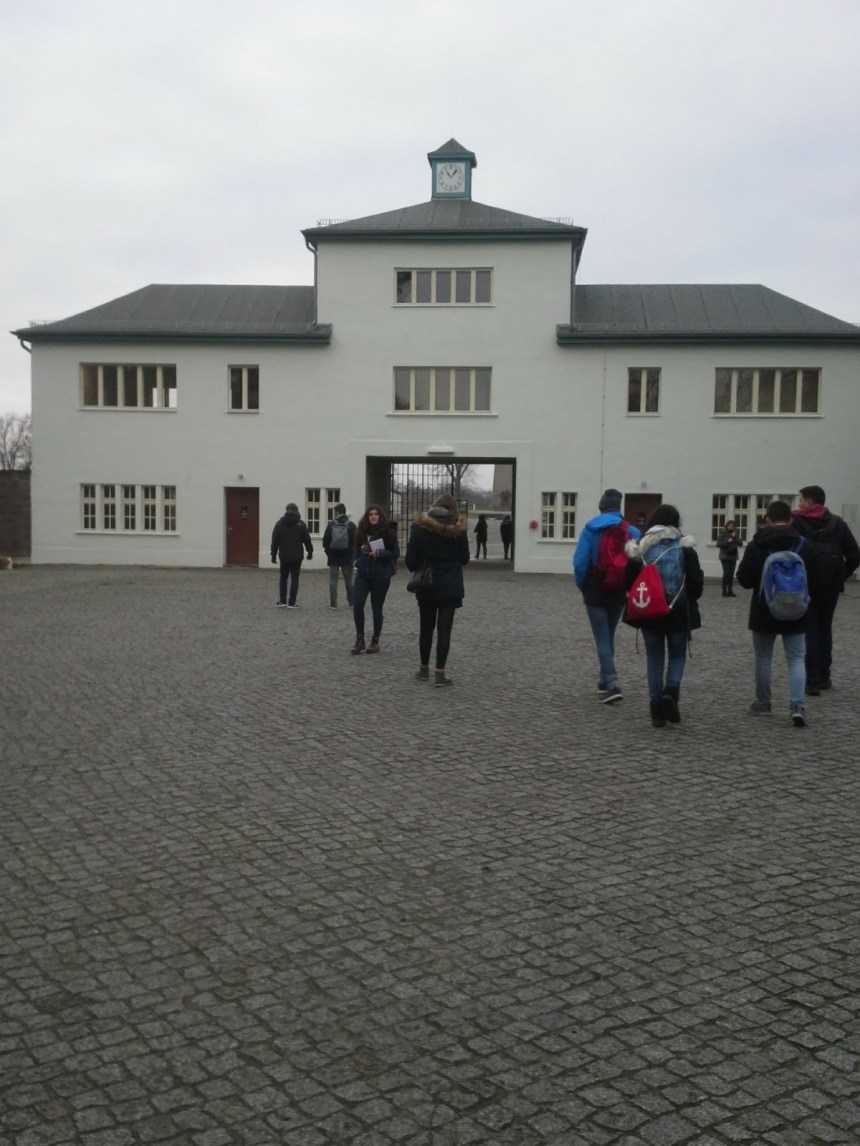
(Photo courtesy Addison Schwing)
By Addison Schwing – Staff Reporter
Anja Schultz is a 17-year-old girl from Germany. She’s a photographer, an equestrian, and an athlete. Like most kids her age, she attends her local high school, and takes a variety of subjects. One of her classes is history – the history of her native Germany. She’s learned all about her country’s history, including that of the second world war, as well as the Holocaust. Eighty-six years ago, the Nazi empire began one of the most horrific events in history; the mass genocide of 17 million people, including Jews, Catholics, LGBT, and Communists. Eighty-six years later, the world is teaching itself about the Holocaust. But in recent years, the number of people who know exactly what happened during the Holocaust is dwindling.
Between February 23-27, Schoen Consulting, a political consulting firm, was commissioned by the Conference on Jewish Material Claims Against Germany to conduct a study on Holocaust knowledge within the U.S. The study consisted of interviewing 1,350 US American individuals, aged 18 and over. The study also referenced millennials, which were considered individuals aged 19-24 years old. In the study, it was found that 11% of adults, and 22% of millenials did not know what the Holocaust was. Forty-one percent of adults could not correctly identify Auschwitz, widely considered to be the most infamous concentration camp operated by the Nazis. Forty-five percent of adults and 49% of millennials could not identify a single concentration camp or ghetto during the Holocaust. Eighty percent of Americans say that they have never visited a Holocaust museum or memorial, and 66% said that they have never been to a Holocaust museum.
Claims Conference Board Member Matthew Bronfman remarked about the findings.
“The study found significant gaps in knowledge of the Holocaust,” he said. “We must take a look at these results and determine where and how best we can begin teaching the next generation these critical lessons which must resonate for decades to come.”
These findings show many things. Primarily, it exposes the ignorance of American adults about one of the worst genocidal events in history. In our current climate, where tumultuous events like slavery and the Civil Rights Movement are frequently taught and referenced, it is surprising that something like the Holocaust, which saw the deaths of millions, is not receiving the same treatment. When presented with the results of the study, Anja remarked that the numbers were “very frightening.” She says that a large percentage of individuals cannot comprehend the scope of the Holocaust, not entirely equating it to denial, more so to bewilderment at something that is understandably incomprehensible – how so many people were exterminated at the pace that it was conducted.
Today’s society is much different than it was a decade ago. Information about anything, from barbeque sauce to cryptocurrency, can be easily accessed from a computer or mobile phone. In a world where such information is so easily accessible, why is it that we are presented with these statistics? What could possibly be as to blame for this disparity in knowledge of the Holocaust?
For one thing, there is the issue of desensitization to violence. Studies link such desensitization to violent video games. For example, a study conducted by researchers at the University of Michigan studied the effects of violent imagery on the brain activity of 39 individuals. First, the participants were asked how regularly they played video games, and how violent they were The participants were fitted with electrode caps to measure brainwave activity. The participants were shown many negative images, and their brain activity was recorded Those that regularly played violent video games responded less to the violent images; they showed less brain activity compared to those who didn’t play video games as often as those who did.
Bruce Bartholow, an assistant professor of psychology at the University of Missouri-Columbia, believes our natural response to violent images and our apparent desensitization to violence affects this.
“Most of us naturally have a strong aversion to the sight of blood and gore,” he said. “Surgeons and soldiers may need to overcome these reactions in order to perform their duties. But for most people, a diminished reaction to the effects of violence is not adaptive. It can reduce inhibitions against aggressive behavior and increase the possibility of inflicting violence on others.”
Similar to this point could also be the rise of nazi sympathizers in the United States. Recent events, such as the 2017 Unite the Right rally in Charlottesville, Virginia, saw the rise of right-wing nationalism and nazi sympathizers waving swastikas and Countries such as Germany and Poland have laws explicitly banning the sympathization of Nazis and national socialism in general. These laws include verbal sympathy, use of imagery outside of educational purposes, and even prohibit denial of the holocaust. One can receive serious legal consequences for violating these laws. However, the U.S. has no such laws. Americans value the freedom of speech as one of the most powerful rights they have, granted by the First Amendment. However, the line between what is and is not acceptable are blurred. In November 2018, 60 students in a Wisconsin High School were widely condemned for performing the Nazi salute, but were not punished because of the protection granted by the First Amendment.
However, there is a growing rise in the use of the word “nazi” being used as a blanket term for anyone that shows a dissenting opinion. The latin term “Reductio ad Hitlerum” was coined in 1953 by Leo Strauss, a German-American philosopher, to refer to ad hominem attacks attributing things or ideas to Adolf Hitler and the Nazi Empire. People have been called Nazis for acts such as supporting immigration reform and denying climate change, or outright supporting President Trump or other conservative politicians and ideas. Researchers reiterate that this devalues the meaning of the word, devalues the atrocities they committed, and trivializes the message they were trying to convey. Both sides of a story can’t be forgotten.
So, what’s the solution? The answer is quite simple; there needs to be legislation to require education about the holocaust. Many European countries have already mandated holocaust education as part of the regular school curriculum; why not us? It is easy enough to want to avoid learning about such a sensitive topic, and understandably so, especially for people whose forefathers may have been held in a camp. Yes, children should keep their innocence, but at what point are we supposed to stop shielding them from the realities of the world we live in? An education about the Holocaust – its causes, effects, and realities – is important for the education of young individuals to ensure that they know what happened, and so that they may never repeat it. The fate of the world rests in the hands of this young, new generation.
Anja may be shocked by the statistics presented to her, but she is hopeful for the future. When asked if she thought that everyone should learn about the Holocaust, she said that she did not expect people to learn about it at the intensity that German students do, but she thinks that everyone should be able to say a little bit about what the Holocaust is and why it happened. And to those who deny it, she has a simple reply.
“I would tell someone who denies it to come here and visit at least one concentration camp, walk through the remains of the barracks, to look at the hair that the Nazi’s shaved off the heads of women and see the shoes that they took, and the gold teeth they collected from the ashes,” she said. “Although it was not the fault of our generation and we can’t change history, we have to make sure that it never happens again.”
As philosopher George Santayana said, “Those who forget history are condemned to repeat it.”
(Some information courtesy claimscon.org, news.umich.edu)
 The Advocate Online