
FEATURES: Depression Affecting More Teens Than Ever, Noticing Warning Signs Is Key
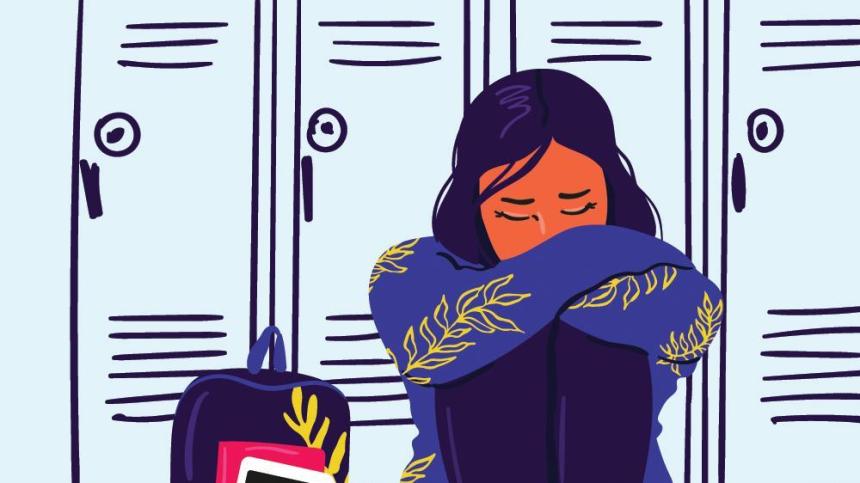
(Photo courtesy spokesman.com)
By Nyasia McDonald – Staff Reporter
Kevin Breel is a 23-year-old writer, comedian, and an activist. When he was in high school, he was the captain of his basketball team, the Drama and Theater Student of the Year, the English Student of the Year, and someone who was consistently on the honor roll and consistently at every party.
But he has also been struggling with depression for the past six years.
¨Real depression is being sad when everything in your life is going right,” Breel said. “That’s real depression and that’s what I suffer from.”
Breel would sit at the edge of his bed some nights with a pen and paper in his hand and a bottle of pills. He has come close to taking his own life. He feared himself. He feared his truth, he feared his honesty, he feared his vulnerability.
¨That fear made me feel like I was forced into a corner and there was only one way out, and so I thought about that way every single day,” Breel said. “I thought about it every single day, and if I’m being totally honest, standing here I’ve thought about it again since, because that’s the sickness, that’s the struggle, that’s depression, and depression isn’t chicken pox. You don’t beat it once and it’s gone forever. It’s something you live with. It’s something you live in. It’s the roommate you can’t kick out. It’s the voice you can’t ignore. It’s the feelings you can’t seem to escape, the scariest part is that after a while, you become numb to it. It becomes normal for you, and what you really fear the most isn’t the suffering inside of you. It’s the stigma inside of others, it’s the shame, it’s the embarrassment, it’s the disapproving look on a friend’s face, it’s the whispers in the hallway that you’re weak, it’s the comments that you’re crazy. That’s what keeps you from getting help.”
Teen depression is a mental health problem that causes a feeling of sadness, loss of interest in activities which is emotional, functional, and physical problems. Teen depression signs and symptoms include a change from the teenager’s previous attitude and behavior that can cause significant distress and problems at school or home, in social activities, or in other areas of life.
About 20 percent of teens are affected by depression by the time they become adults. Teen depression can lead to suicide or cause suicidal thoughts. Teen suicide is the third leading cause of death in youth 10-24 years of age in the United States. Each day in the U.S. there are an average of 4,800 suicide attempts by young people in grades 7-12.
According to the National Institute of Mental Health, “four out of five teens who attempt suicide have given clear warning signs. In 2017, an estimated 11 million U.S. adults aged 18 or older had at least one major depressive episode with severe impairment.”
Female teens develop depression twice as often than men. Abused and neglected teens are especially at risk. As are adolescents who suffer from chronic illnesses or other physical conditions and teens with a family history of depression or mental illness.
Between 20 to 50 percent of teens suffering from depression have a family member with depression or some other mental disorder.
Approximately two-thirds of teens with major depression also battle another mood disorder like dysthymia, anxiety, antisocial behaviors, or substance abuse. Young people who experienced trauma or disruptions at home, including divorce and deaths of parents.
According to the National Center for Health Statistics, “Women were almost twice as likely as were men to have had depression. Women (10.4%). Men (5.5%).”
Among men, the prevalence of depression was 5.7 % in 2007–2008 and 5.4% in 2015–2016. Among women, the prevalence of depression was 10.4% in 2007–2008 and 9.3% in 2015–2016.
According to the Mayo Clinic, “Depression symptoms likely won’t get better on their own — and they may get worse or lead to other problems if untreated. Depressed teenagers may be at risk of suicide, even if signs and symptoms don’t appear to be severe.”
There are many ways for teens to develop depression: having issues that negatively impact self-esteem, like obesity, peer problems, long-term bullying or academic problems, having other mental health conditions, like bipolar disorder, an anxiety disorder, a personality disorder, anorexia or bulimia, having ongoing pain or a chronic physical illness such as cancer, diabetes or asthma, having certain personality traits, such as low self-esteem, being overly dependent, or self-critical, being gay, lesbian, bisexual or transgender in an unsupportive environment, having family history and issues with family like having a parent, grandparent or other blood relative with depression, bipolar disorder or alcohol use problems, having a family member who died by suicide, having a dysfunctional family and family conflict, having experienced recent stressful life events, such as parental divorce, parental military service or the death of a loved one.
Some warning signs of a teen suffering from depression are: sadness or hopelessness, low self-esteem, sluggishness (less active), substance abuse, spending more time alone, a decrease in desire to do things they used to like to do (sports, activities, hobbies), physical ailments (headaches, appetite problems, sleeping problems), problems in school (falling grades, getting into trouble, not paying attention in class), talking about death or suicide, not caring about appearance, and running away from home.
What is most important for teens to know, researchers say, is that depression is treatable.
There are different types of ways to treat depressions like therapies and different types of medication.
“Treatment depends on the type and severity of your teenager’s depression symptoms. A combination of talk therapy (psychotherapy) and medication can be very effective for most teens with depression,” The Mayo Clinic said.
There are two different types of medication that are often prescribed to treat depression which are fluoxetine (Prozac) and escitalopram (Lexapro). The Food and Drug Administration (FDA) has approved those two medications for teen depression.
When taking fluoxetine (Prozac) the side effects can cause nausea, upset stomach, constipation, headaches, anxiety, sleep problems (insomnia), drowsiness, dizziness, nervousness, heart palpitations, loss of appetite or increase in appetite, weight changes, cold symptoms (stuffy nose, sneezing, sore throat), dry mouth, and/or impotence.
And when taking escitalopram (Lexapro) the side effects can cause about the same effects as when taking fluoxetine (Prozac). It causes, drowsiness, dizziness, sleep problems (insomnia), nausea, upset stomach, gas, heartburn, constipation, weight changes, dry mouth, yawning, ringing in the ears, and/or impotence.
When a depressed teen is prescribed by a doctor medication to take the doctor encourages the teen to take the medicine for six months to a year. If the teen stops taking the medication too soon may cause symptoms to return or to get worse.
Some depressed teens has to take the medication for a longer period of time to keep the depression from coming back.
If the medication seems to not work and the depression signs and symptoms continue, begin to interfere in your teen’s life, or cause you to have concerns about suicide or your teen’s safety, talk to a doctor or a mental health professional trained to work with adolescents. Your teen’s family doctor or pediatrician is a good place to start. Or your teen’s school may recommend someone.
There are two major different types of teen depression that are called Major Depressive Disorder and Dysthymic Disorder.
Major Depressive Disorder is characterized by a combination of symptoms that interfere with a person’s ability to work, sleep, study, eat, and enjoy once–pleasurable activities. Major depression is disabling and prevents a person from functioning normally. An episode of major depression may occur only once in a person’s lifetime, but more often, it recurs throughout a person’s life.
Dysthymic Disorder is also called dysthymia, is characterized by long-term (two years or longer) but less severe symptoms that may not disable a person, but can prevent one from functioning normally or feeling well. People with dysthymia may also experience one or more episodes of major depression during their lifetimes.
The best way to help a depressed teen is to talk to a pediatrician or family physician and to talk to the teen about your concerns. There may be a specific cause for why he or she is acting a certain way. Opening up the lines of communication lets your teenager know you care and that you are available to talk about the situation.
Be available to listen and encourage your teen to talk to you about anything that might be bothering her. Support your teen’s daily routines, such as taking medications and eating healthy, and make sure your home is a safe, comforting place.
Do not ignore the signs or symptoms of depression. If depression is left untreated, the depression can get worse and can lead to thoughts of suicide or even the act itself.
Kevin Breel is living proof that depression is serious – and treatable – condition if warning signs are not missed and help is sought.
(Some information courtesy medicinet.com, centerfordiscovery.com, nimh.nih.gov, cdc.gov, mayo.edu, rxlist.com, verywellmind.com)
 The Advocate Online